ASUS ROG Zephyrus G14 (2024) Review: The Gaming Laptop for People Who Hate Gaming Laptops
9.0/10
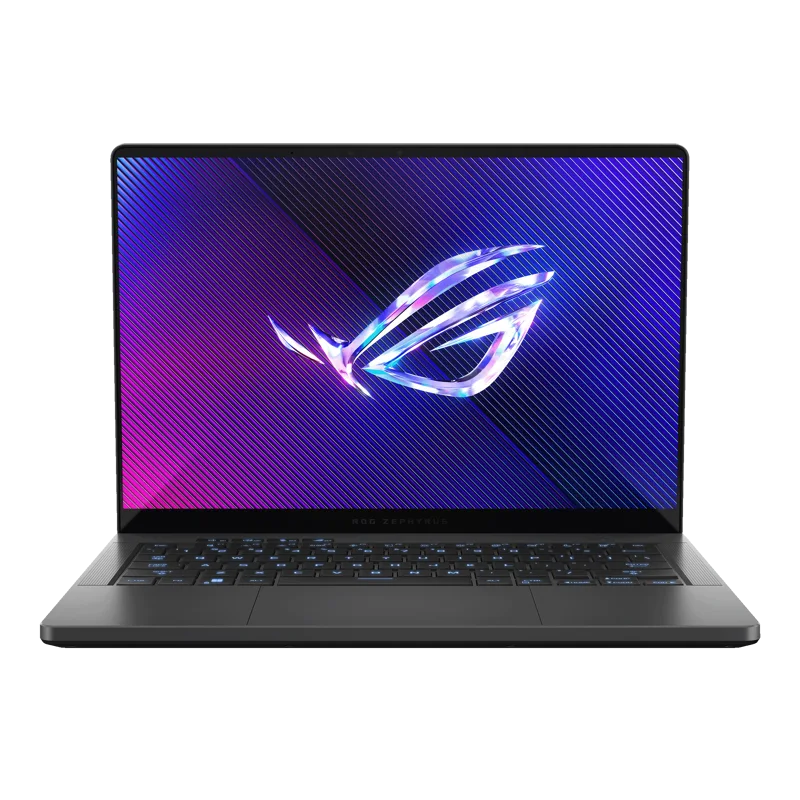
Every year there's a small handful of laptops that make you reconsider what "gaming laptop" even means, and the 2024 ROG Zephyrus G14 is squarely one of them. At 1.5 kg with a 14-inch chassis, it's genuinely comfortable to carry around all day, yet it packs an 8-core AMD Ryzen 9 8945HS and an RTX 4060 with 8GB of GDDR6 — a pairing that would have sounded absurd in a laptop this size only a few years ago.
The display: OLED without the usual gaming-laptop tradeoff
The star of the show is the 3K (2880x1800) OLED panel running at 120Hz. OLED on a gaming laptop used to mean a tradeoff — gorgeous colors and true blacks, but a refresh rate that couldn't keep up with the GPU underneath it. That tradeoff is essentially gone here: 120Hz is plenty for the frame rates an RTX 4060 realistically sustains at 3K in demanding titles, so you get the OLED contrast without feeling like you left performance on the table. For anyone who also uses the laptop for photo or video editing, the color accuracy and true blacks make this one of the better creative-work displays in the gaming-laptop category, not just a gaming panel that happens to also be pretty.
Design language and everyday usability
ASUS gave the Zephyrus line a more restrained, less "gamer" aesthetic than the Strix family, and the G14's understated aluminum lid (some configurations add a subtle AniMe Matrix dot-matrix display) means it doesn't look out of place in an office setting the way a lot of RGB-heavy gaming laptops do. The keyboard deck runs cooler than you'd expect for the hardware packed underneath, and the trackpad is notably better than what most gaming-laptop manufacturers bother with, since gaming laptops are typically designed around external mouse use.
Memory, storage, and the soldered-RAM tradeoff
32GB of LPDDR5X-6400 is soldered rather than upgradeable, which is the one meaningful compromise ASUS made to hit this weight and thinness — but 32GB from the factory is a genuinely generous starting point, and it's paired with a fast 1TB PCIe 4.0 NVMe SSD, so storage isn't a bottleneck either. Compare that to the ROG Strix G16, which ships with only 16GB but keeps it upgradeable — a genuinely different philosophy depending on whether you'd rather have more RAM on day one or the option to add more later.
Battery life and thermals
The 73Wh battery is respectable for a gaming laptop of this class, though as with the larger Strix G16, don't expect all-day battery life once you're actually gaming rather than writing emails — for general productivity and web browsing away from a charger, however, the G14 holds up considerably better than most GPU-equipped gaming laptops, closer to what you'd expect from a good ultrabook. Fan noise under load is present but well-controlled relative to the performance on offer, and thermal throttling is minimal in most real-world sessions.
Where it sits in the lineup
Where the Zephyrus G14 pulls ahead of larger 16-inch gaming laptops isn't raw GPU horsepower — the RTX 4060 is a mid-tier card, not a flagship — it's the fact that ASUS managed to fit a legitimately good gaming experience into a chassis you'd happily carry to a coffee shop or on a flight. If you specifically want more GPU headroom and are willing to trade portability for it, the Strix G16's RTX 5070 is the more powerful chip; if you want the lightest gaming laptop that still feels like a real gaming laptop, this is it.
Ports and the everyday software experience
ASUS trims connectivity slightly on the G14 compared to the larger Strix G16: you still get USB-C with DisplayPort and power delivery, USB-A ports, HDMI, and a headphone jack, but no full-size Ethernet, which is a reasonable tradeoff given the thinner chassis. Wi-Fi 6E covers wireless connectivity well for anyone without access to wired internet. The Armoury Crate software suite is shared across the ROG lineup, handling performance profiles, fan curves, and the optional AniMe Matrix display customization on higher-end configurations — it's a genuinely useful control panel once you've disabled the parts you don't need, like the more aggressive background telemetry and update-nagging some users choose to turn off.
Speakers, microphone, and video-call quality
ASUS fitted the G14 with a six-speaker setup (two tweeters, two woofers, positioned around the keyboard deck and underside) that's genuinely one of the better-sounding built-in speaker systems on any laptop, gaming or otherwise — bass response in particular is noticeably stronger than the thin, tinny sound most ultraportables settle for. The microphone array and 1080p webcam are solid for video calls, and ASUS includes an AI-assisted noise-cancellation toggle in its software that does a reasonable job filtering out keyboard clatter and background noise during calls, a small but genuinely useful inclusion for anyone using this as a primary work machine as well as a gaming laptop.
Who should think twice
The soldered 32GB memory configuration is generous today, but it does mean this specific spec ceiling is fixed for the life of the machine — if you're the kind of buyer who tends to keep a laptop for five-plus years and expects to need more memory eventually, that's worth weighing against the Strix G16's upgradeable (if smaller, out of the box) memory instead. Similarly, the RTX 4060 is a genuinely capable mid-tier GPU today, but anyone specifically chasing maximum frame rates at 3K resolution in the most demanding new releases a few years from now may find themselves wanting to dial back settings sooner than owners of higher-tier GPU configurations. None of this makes the G14 a bad buy — it just means the ideal buyer values portability and today's performance over long-term upgrade headroom.
Verdict: At $1,599, the Zephyrus G14 (2024) remains one of the best-balanced compact gaming laptops available — a rare case where "small and light" doesn't come with an obvious performance apology attached.
Full specs and current pricing: ROG Zephyrus G14 (2024) product page.