Best Ultraportable Laptops (2026 Buying Guide): Three Very Different Ways to Go Light
"Ultraportable" gets used loosely in laptop marketing, but the category genuinely matters if travel weight or all-day battery life is a real constraint for you. We compared three laptops from our catalog that all target this space in meaningfully different ways — not a ranked "best overall" list, since the right pick depends heavily on which platform and tradeoffs suit you.
ASUS Zenbook 14 OLED (UX3405) — the lightest, most vivid option
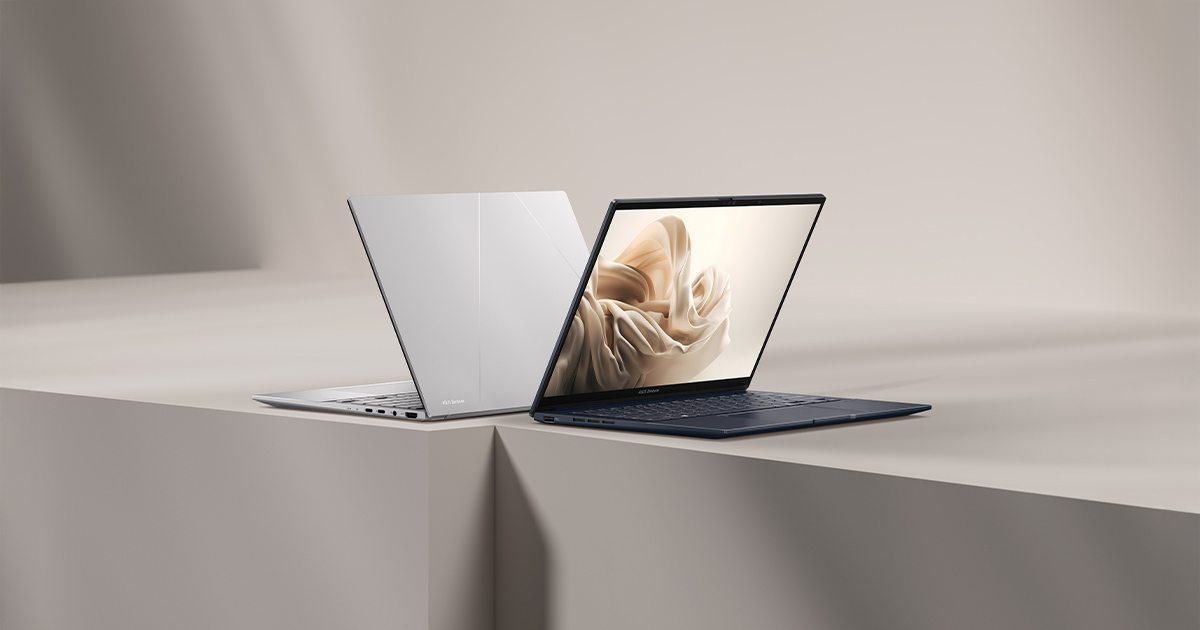
The ASUS Zenbook 14 OLED (UX3405) pairs an Intel Core Ultra 9 285H with a 3K 120Hz OLED panel at just 1.2 kg — the lightest machine in this comparison, and one of the most vivid displays, at a relatively accessible $1,299. 32GB of LPDDR5x memory and a 1TB SSD round out a configuration that has no obvious weak point for general productivity, web browsing, and light creative work, and the 600-nit peak brightness makes it genuinely usable outdoors, which is not always true of OLED laptop panels.
ASUS Vivobook S14 (M5406) — the AMD-powered value pick
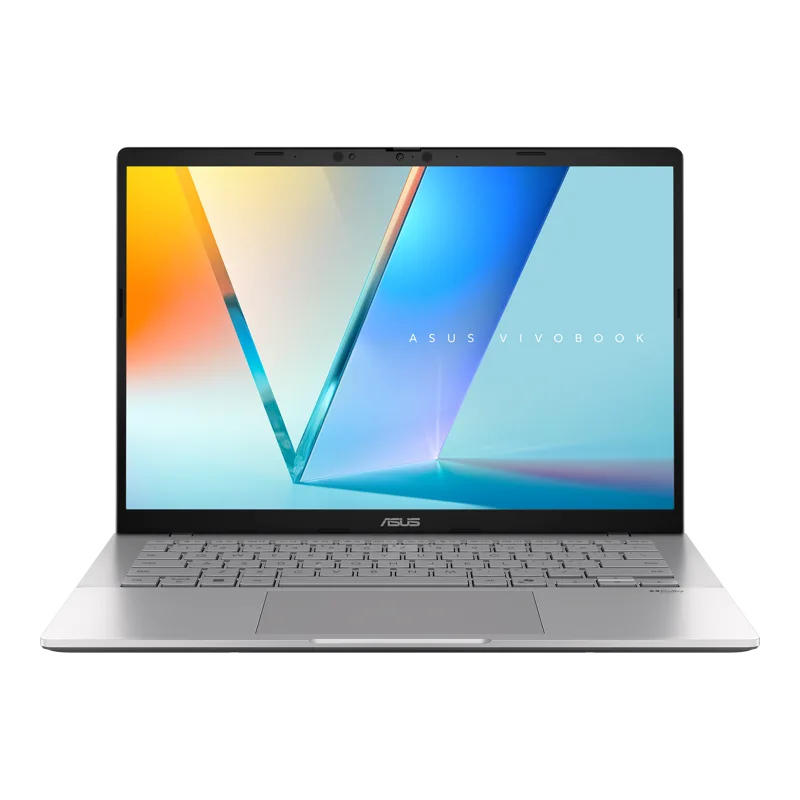
The ASUS Vivobook S14 (M5406) takes a different angle on similar goals: an AMD Ryzen AI 9 HX 370 (up to 12 cores) with integrated Radeon 890M graphics and a similarly excellent OLED panel, at $1,099 — the most affordable of the three, and notable for using AMD's latest mobile silicon rather than Intel's. The integrated Radeon 890M graphics, while not a discrete GPU, is genuinely capable for light gaming and creative acceleration tasks that would have required a discrete card just a couple of generations ago.
Apple MacBook Air (M2) — the cross-platform option
For buyers who specifically want the Apple ecosystem instead of Windows, the MacBook Air (M2) remains a benchmark for battery life and fanless silence in this same weight class, at $1,199, even though the M2 chip itself is now a few generations behind Apple's current Silicon. Its main tradeoff against the two Windows options here is ecosystem lock-in and a higher entry price for expanded storage or memory, since Apple's configurations can't be upgraded after purchase the way some Windows ultrabooks allow.
What "ultraportable" doesn’t mean here
Worth flagging: none of these three are gaming laptops, and none carry a discrete GPU strong enough for demanding modern titles at high settings — if gaming on the go is a priority alongside portability, the closest option in our catalog is the ROG Zephyrus G14, which sacrifices some battery life and adds real weight in exchange for genuine discrete-GPU gaming performance. What unites the three machines in this guide instead is that they're built for people whose daily workload is browsing, writing, communication, and light creative work, where CPU efficiency and display quality matter far more than GPU horsepower.
Software preload: how much bloat to expect
Windows OEM laptops have a long-standing reputation for preloaded trial software and manufacturer utility apps, and both ASUS machines here are no exception, though ASUS's MyASUS and Armoury Crate-adjacent utilities are at least genuinely useful for driver updates and battery health management rather than pure bloatware. The MacBook Air, by contrast, ships essentially clean beyond Apple's own first-party apps, which some buyers see as a meaningful advantage and others find limiting if they specifically wanted OEM-provided battery calibration or thermal management tools that Windows laptops typically bundle.
Build materials and how each feels in hand
All three use metal (aluminum or an aluminum-magnesium alloy) for at least the lid and deck, which is part of why they all feel notably more premium than budget plastic ultrabooks in the same weight class — the Zenbook 14's chassis has a subtle spun-metal finish on some color options, the Vivobook S14 opts for a cleaner brushed finish at its lower price point, and the MacBook Air's unibody aluminum construction remains a category reference point that most Windows manufacturers still explicitly benchmark their own designs against.
Battery life in practice, not just on paper
Rated battery figures rarely survive contact with real usage patterns, and it's worth being clear about what "all-day battery life" actually means for each of these three: with screen brightness around 50%, standard web browsing, document editing, and video calls, all three comfortably clear a full 8-hour workday, with the MacBook Air typically having the largest remaining buffer at the end of the day thanks to Apple Silicon's efficiency advantage. Push any of them harder — continuous video calls with camera on, heavier creative app use, or higher screen brightness for outdoor visibility — and that buffer shrinks meaningfully faster on the two Windows machines than on the Air, though neither Windows option should leave you searching for an outlet mid-afternoon under normal use.
A note on how we picked these three
We deliberately avoided turning this into a strict ranked list, because the honest answer to "which ultraportable is best" depends more on your existing ecosystem and OS preference than on any single spec difference between these three machines. All three use OLED or comparably excellent display technology, all three land within roughly 100 grams of each other, and all three are priced within about $200 of one another — the kind of genuinely close race that means the deciding factor should be the things that matter to your specific workflow (Windows vs. macOS software availability, AMD vs. Intel platform preferences for driver or compatibility reasons, or simply which ecosystem your other devices already live in) rather than chasing a marginal spec advantage on any single line item.
Making the choice
All three land in a similar 1.2–1.3 kg weight range and similar $1,100–$1,300 price band, so the decision mostly comes down to platform preference (Windows vs. macOS) and, within Windows, Intel vs. AMD — a genuinely rare case in laptop shopping where the "wrong choice" is hard to make, since all three are strong picks in this category. If you're upgrading from an older Windows laptop and want the best battery life and thinnest chassis, the Zenbook 14 or Vivobook S14 are both excellent; if you're open to switching platforms entirely, the MacBook Air remains the category's most-cited reference point for a reason.