Dell XPS 13 (9300, 2020) Review: The Ultrabook That Defined a Design Language
8.4/10
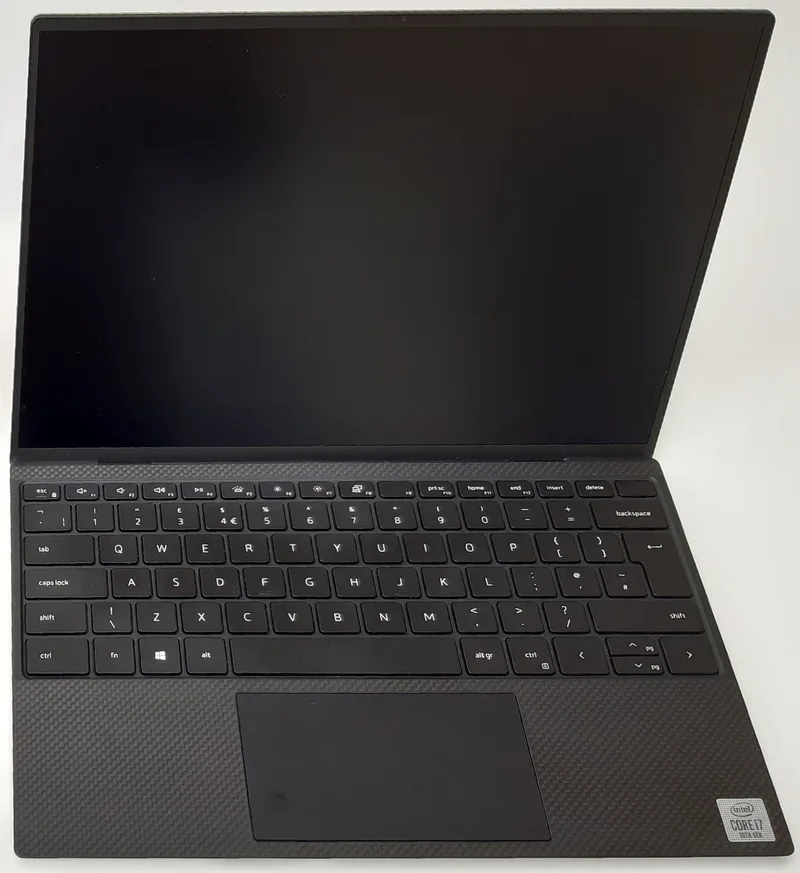
The 2020 XPS 13 (model 9300) is one of those laptops whose design influence outlasted its own specs sheet — the thin bezels, 16:10 InfinityEdge display, and compact 13.4-inch footprint it popularized are now standard expectations for the entire ultrabook category, Windows and Mac alike. The Intel Core i7-1065G7 inside is a 4-core 10th-generation chip that was competitive at launch but is now firmly a budget-tier option by current standards — worth knowing if you're comparing this against a newer machine on raw CPU performance rather than shopping it specifically for its design and screen.
The display that changed ultrabook design
The 13.4-inch UHD+ InfinityEdge panel, at 3840x2400 in its highest configuration, is still a genuinely striking display — the 16:10 aspect ratio gives noticeably more vertical space than the 16:9 panels common on older laptops, which matters more than it sounds for anyone reading documents or browsing the web rather than only watching video. The near-invisible bezels around the screen were a genuine industry first at this scale, and most competing ultrabooks released since have converged toward similar proportions.
Build quality and keyboard feel
The aluminum lid and palm-rest combined with a carbon-fiber (or glass-fiber, depending on color option) deck gives the 9300 a distinctive look and feel that's held up well — it doesn't flex under normal use, and the keyboard, while shallow by older ThinkPad standards, offers decent tactile feedback for a laptop this thin. The precision glass trackpad remains one of the better Windows trackpads of its era.
Weight, battery, and how it compares to newer machines
At 1.27 kg with a 52Wh battery, it's comparable in weight to the MacBook Air M2, though battery life on the older Intel platform doesn't come close to matching Apple's Silicon-era efficiency — that's less a criticism of the XPS 13 specifically than a reflection of how far the entire ultrabook category's battery life has moved since 2020. Expect meaningfully shorter runtime away from a charger than any of the newer machines in our laptop catalog.
Should you buy one today?
For buyers today, the honest framing is that the XPS 13 (9300) is a design and display showcase running increasingly dated internals — a fine secondhand or budget pick for web browsing and document work, but not something to buy new expecting current-generation CPU performance. If raw longevity and battery life matter more to you than nostalgia for this specific design era, the ThinkPad X1 Carbon or the MacBook Air are the more future-proof picks in this weight class.
Ports and the keyboard experience
The 9300 was also an early adopter of the USB-C-only trend on Windows ultrabooks, with two Thunderbolt 3 ports and a microSD slot but no full-size USB-A or HDMI — a genuinely divisive decision at the time that forced many buyers into carrying a dongle. The keyboard, while shallow, has reasonable travel for the chassis thickness, and the precision touchpad remains one of the better Windows trackpads from this era, helped along by Windows' own driver-level trackpad improvements over the years since launch.
Webcam and video-call quality: a known weak point
If there's one area where the 9300's 2020-era design shows its age most obviously in day-to-day use, it's the webcam — a lower-resolution sensor placed to preserve the ultra-thin bezel look, which was a deliberate tradeoff at a time when video calls were a far smaller part of daily laptop use than they became shortly afterward. Compared to newer ultrabooks that prioritize webcam quality given how central video calls have become to remote and hybrid work, this is a genuinely noticeable downgrade worth factoring in in if video calls are a significant part of your daily workflow.
The InfinityEdge legacy, five-plus years on
It's worth pausing on just how many laptops — from nearly every manufacturer, including several elsewhere in our own catalog — adopted thin-bezel, high-aspect-ratio displays after the XPS 13 popularized the look. That's a genuine mark of design influence rare in the laptop industry, where most manufacturers iterate incrementally on existing conventions rather than setting new ones. Whatever its performance limitations by current standards, the 9300's role in shifting the entire ultrabook category's visual language toward thinner bezels and taller-aspect-ratio panels is difficult to overstate, and it's part of why this specific model still gets referenced in laptop design retrospectives years after newer XPS generations have replaced it in Dell's current lineup.
The keyboard backlight and other small details
Small details like the two-stage white keyboard backlight, the dedicated Windows Hello IR camera for face login, and a genuinely satisfying, precise-feeling power button all reflect the level of fit-and-finish attention Dell put into this specific model — the kind of details that don't show up on a spec sheet comparison but were noticeably ahead of the ultrabook competition when the 9300 launched in 2020.
Buying used in 2026: what to actually expect
If you're considering a used XPS 13 (9300) today, treat it as a secondary or budget machine rather than a primary laptop — the 10th-generation Core i7 will feel noticeably slower than anything released in the last two or three years for tasks like modern web browsing with many tabs, video calls with background blur or virtual backgrounds enabled, and any lightly demanding creative work. Battery health is also worth checking carefully on a used unit this old, since lithium-ion batteries degrade with age and charge cycles regardless of how well they were cared for, and replacement battery service for a five-plus-year-old ultrabook isn't always straightforward or cheap relative to the machine's used market value.
Upgradeability and repair realities
Unlike Dell's later XPS generations that moved toward fully soldered configurations, the 9300's RAM is soldered but its NVMe SSD is a standard, replaceable M.2 module, meaning a used unit can still get a meaningful capacity or speed bump years after purchase without needing to replace the whole machine, an option newer ultra-thin competitors increasingly close off entirely in the name of shaving a few more millimeters of chassis thickness.
Verdict: A genuinely influential ultrabook whose design held up better than its now-dated 10th-gen Intel internals — recommended mainly as a value pick rather than a current-generation contender.
Full specs: Dell XPS 13 (9300, 2020) product page.