NZXT Player: Two Review: A Prebuilt RTX 5070 Desktop That Doesn’t Ask You to Compromise on Case Quality
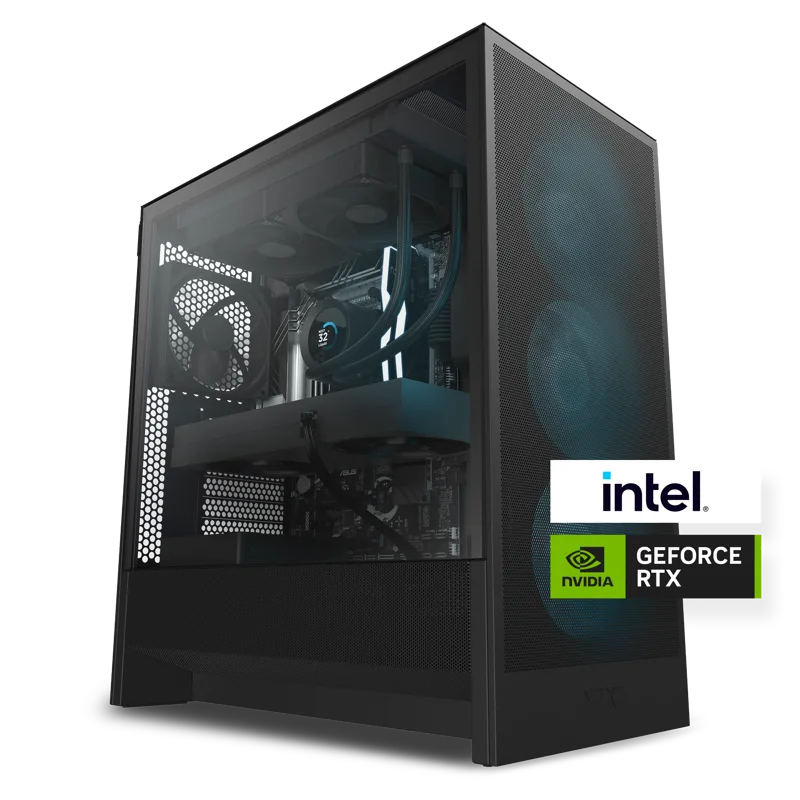
Prebuilt gaming desktops have a reputation problem that's mostly earned: cramped generic cases, mediocre stock cooling, and cable management that looks like an afterthought. NZXT's Player line exists specifically to counter that reputation — the company built its brand on cases and cooling before it ever sold complete systems, and that DNA shows clearly in the Player: Two.
That history matters more than it might seem. NZXT spent years as a components company before entering the prebuilt market, selling cases, AIO liquid coolers, and PC-building accessories directly to the DIY-builder community — a community that is famously unforgiving of bad thermal design or sloppy cable routing. When that same company started selling complete systems, it had every incentive to apply the standards its core audience already expected, rather than the corner-cutting that's common among prebuilt brands with no components heritage. The Player: Two is a direct product of that lineage, and it shows in details a generic prebuilt brand typically skips.
The core configuration pairs an AMD Ryzen 5 9600X, a 6-core chip that's more than capable of keeping a modern GPU fed without becoming the bottleneck, with an NVIDIA GeForce RTX 5070 carrying 12GB of VRAM. That's a genuinely well-balanced pairing for 1440p gaming — NZXT hasn't paired an underpowered CPU with an overpowered GPU just to advertise a bigger graphics card number, which is a trap plenty of budget prebuilts fall into. 16GB of DDR5-4800 rounds out the configuration, which is adequate for gaming today though buyers planning to also run demanding creative or virtualization workloads alongside gaming may want to budget for a RAM upgrade down the line.
Storage is a straightforward 1TB NVMe SSD — fast enough that load times aren't a bottleneck, though as with any single-drive gaming build, heavy game libraries will eventually push you toward adding a second drive. That's a normal and expected upgrade path rather than a design flaw.
What genuinely separates the Player: Two from a generic prebuilt is the case and cooling package. NZXT builds and tests every system in-house, with liquid CPU cooling as standard rather than an optional upsell — a meaningful difference from budget prebuilt brands that ship stock air coolers and call it done. The case itself carries NZXT's usual design language: clean cable routing, tempered-glass side panel, and airflow that's been engineered rather than an afterthought bolted onto a generic beige box.
Compared to the Player: Three elsewhere in this catalog, the Player: Two sits a tier below in raw GPU horsepower, but the fundamentals — build quality, cooling, cable management — are shared across the line rather than being reserved for the flagship configuration. That consistency matters: you're not paying a premium purely for a bigger number on the GPU while getting a worse chassis at the lower tier, which is exactly the trap a lot of prebuilt brands set with their entry-level SKUs.
Who is the Player: Two actually for? Anyone who wants genuinely strong 1440p gaming performance without researching, sourcing, and assembling components themselves, and who's willing to pay a modest premium over a self-build for guaranteed compatibility, a real warranty, and a case/cooling package that doesn't need immediate replacement. If you're comfortable building your own PC, you can likely match or beat this configuration's price-to-performance ratio by shopping parts individually — that's true of virtually every prebuilt on the market. But for buyers who value their time over that last 10-15% of savings, and who specifically care about not inheriting a cramped case with a wheezing stock cooler, the Player: Two is one of the more credible prebuilt options currently available at the 1440p tier.
The RTX 5070's 12GB of VRAM is worth calling out specifically: it's enough headroom for high-resolution textures in modern titles without immediately hitting a VRAM ceiling, which has become a real limiting factor on some cheaper cards in this performance class. Combined with the Ryzen 5 9600X's strong single-thread performance, this is a system that should stay comfortably capable through the current console generation's remaining lifespan, rather than needing a GPU upgrade within a year or two of purchase.
Upgradeability deserves a specific mention too, since it's one of the classic knocks against prebuilt systems in general — some manufacturers use proprietary motherboards, non-standard power supply connectors, or cases so cramped that swapping a GPU years down the line becomes a genuine headache. NZXT builds the Player line around standard ATX components housed in its own cases, which means a future GPU upgrade, RAM expansion, or additional storage drive is a normal PC-building task rather than a manufacturer-specific ordeal. That's a meaningfully different proposition from budget prebuilt brands that lock you into their own ecosystem of parts, and it's a genuine long-term cost-of-ownership advantage that only becomes obvious a few years after purchase, when the GPU market has moved on and a straightforward swap is all that's needed to stay current.
Noise levels under load are another area where the liquid-cooling-as-standard decision pays off in practice, not just on a spec sheet. Air-cooled prebuilts in this performance tier often become audibly loud under sustained gaming sessions, as smaller stock coolers work harder to keep pace with a genuinely capable GPU like the RTX 5070. The Player: Two's liquid cooling keeps thermals — and the fan noise that follows from them — noticeably more contained, which matters if the desktop lives somewhere other than a dedicated, sound-insulated office.
Warranty and support coverage round out the ownership picture, and it's another area where NZXT's positioning as a components-first company shows through: the Player line ships with a genuine manufacturer warranty covering the whole system, not a patchwork of separate component warranties you'd need to track individually as you would with a self-built PC. For buyers who specifically want to avoid managing individual RMA processes with a motherboard vendor, a GPU vendor, and a PSU vendor separately if something fails, that single point of contact is a real, if easy to overlook, part of the value proposition here.