MacBook Air M2 vs. ASUS Zenbook 14 OLED (2026): Which Ultraportable Should You Actually Buy?
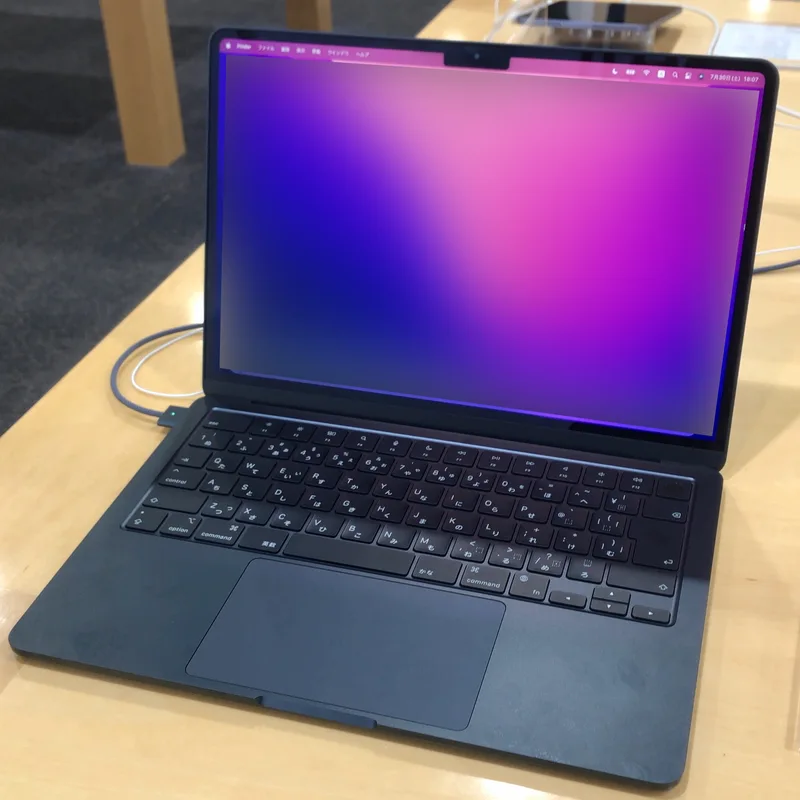
Both of these laptops show up on nearly every "best ultraportable" shortlist, and both are genuinely excellent — which is exactly why the choice between them is harder than picking between a good laptop and a bad one. The MacBook Air 13-inch (M2) remains the default recommendation for a huge share of buyers years after launch, while the ASUS Zenbook 14 OLED is the strongest answer the Windows side has to it. Here's what actually separates them once you get past the operating-system tribalism.
Display: two very different kinds of excellent
The MacBook Air's 2560x1664 Liquid Retina display is a fine, color-accurate LCD panel, but it's an LCD, and next to the Zenbook's 3K (2880x1800) OLED panel at 120Hz the difference is obvious within seconds. OLED delivers true blacks and dramatically higher contrast, and the Zenbook's higher refresh rate makes everyday scrolling and window animations visibly smoother. For photo editing, video review, or just watching a dark movie on the couch, the Zenbook's screen is the better piece of glass. Apple's panel is still very good — just not in the same tier.
Performance and efficiency: the M2 is older but still efficient
The Apple M2 chip is now a few generations behind Apple's current silicon, and the Zenbook's 16-core Intel Core Ultra 9 285H has a clear edge in raw multi-threaded throughput for tasks like video export or code compilation. But the M2's 8-core design remains remarkably efficient for its age, and single-threaded responsiveness — the thing you actually feel during everyday use, like app switching and web browsing — still feels snappy years after launch. Neither laptop will bottleneck a typical productivity workload; the Zenbook pulls ahead specifically when a task can use all 16 cores at once.
Battery life: still Apple''s strongest card
This is where the M2 architecture's efficiency advantage shows up most clearly. Apple rates the MacBook Air for up to 18 hours of video playback, and while the Zenbook's 75Wh battery is larger in absolute terms than the Air's 52.6Wh cell, the M2's power efficiency generally lets the MacBook Air stretch further on a single charge in mixed real-world use. If all-day battery life without hunting for an outlet is your top priority, the MacBook Air still has an edge here that the Zenbook's bigger battery doesn't fully close.
Build, weight, and the fanless question
Both laptops are excellently built and close in weight (1.24kg for the Air versus 1.2kg for the Zenbook), but the MacBook Air's completely fanless design means it runs silently under every workload, at the cost of throttling under genuinely sustained heavy loads. The Zenbook has a small fan that spins up under load but keeps the Core Ultra 9 running at higher sustained clocks than a fanless design could manage. Neither approach is objectively correct — it depends whether you value total silence or sustained performance more.
Ports, storage, and repairability
Neither laptop makes upgrading easy after purchase. The MacBook Air's storage and memory are both soldered to the logic board, so the configuration you order — 8, 16, or 24GB of unified memory and 256GB to 2TB of SSD storage — is permanent for the machine's life; buying more than you think you need up front is the only real hedge. The Zenbook's 32GB of LPDDR5x is similarly soldered, though its 1TB SSD uses a standard M.2 slot in some regions, which at least leaves a storage upgrade path even if memory is fixed. Port selection favors the Zenbook slightly for Windows-centric offices still relying on a mix of USB-A peripherals and external displays, while the Air leans more heavily on USB-C alone, in keeping with Apple's broader ecosystem direction.
Software ecosystem: the decision that actually matters most
For most buyers, the real decision isn't in the spec sheet at all — it's whether you're inside Apple's ecosystem (iPhone, iPad, iCloud, Handoff) or need specific Windows-only software for work. Creative professionals in video and photo workflows often lean Mac for ecosystem reasons that have nothing to do with this specific comparison; engineers and IT-adjacent buyers who need Windows-only tools have no real alternative to something like the Zenbook. We cover this exact platform question in much more depth, including where Apple Silicon, Intel Core Ultra, and AMD Ryzen AI chips each have real advantages, in our cross-platform chip guide.
Webcam and speakers for calls and media
Apple's 1080p FaceTime camera on the M2 Air, combined with a genuinely strong quad-speaker system, makes it one of the better laptops in this size class for video calls and casual media consumption without headphones — the speakers in particular punch above their size in a way few Windows ultrabooks match. The Zenbook's speakers are competent but noticeably thinner-sounding by comparison, though its webcam performs comparably well thanks to the OLED panel's accurate color reproduction feeding back into video calls. If you spend a lot of time on calls or watch video without headphones, the Air has a real, easily overlooked advantage here — one that rarely shows up on a spec sheet but is noticeable within the first week of daily use.
Price and value
The MacBook Air starts at $1,199 and the Zenbook 14 OLED at $1,299 — close enough that price alone rarely decides this comparison. What you're really paying the extra $100 for with the Zenbook is the OLED panel; what you're paying for with the Air, indirectly, is Apple's resale value, which tends to hold up better over several years than most Windows ultrabooks, the Zenbook included.
Who should buy which
If you live in Apple's ecosystem, want the longest realistic battery life, or prioritize total silence, the MacBook Air remains the easy, low-regret choice years after launch — which is exactly why it keeps showing up on nearly every "best ultraportable" shortlist. If you need Windows specifically, want the better screen for visual work, or need more raw multi-core throughput, the Zenbook 14 OLED is the stronger pick and arguably the best all-around Windows ultraportable at its price today.