Intel Core Ultra vs. AMD Ryzen AI vs. Apple Silicon in 2026 Laptops: Which Platform Should You Buy?
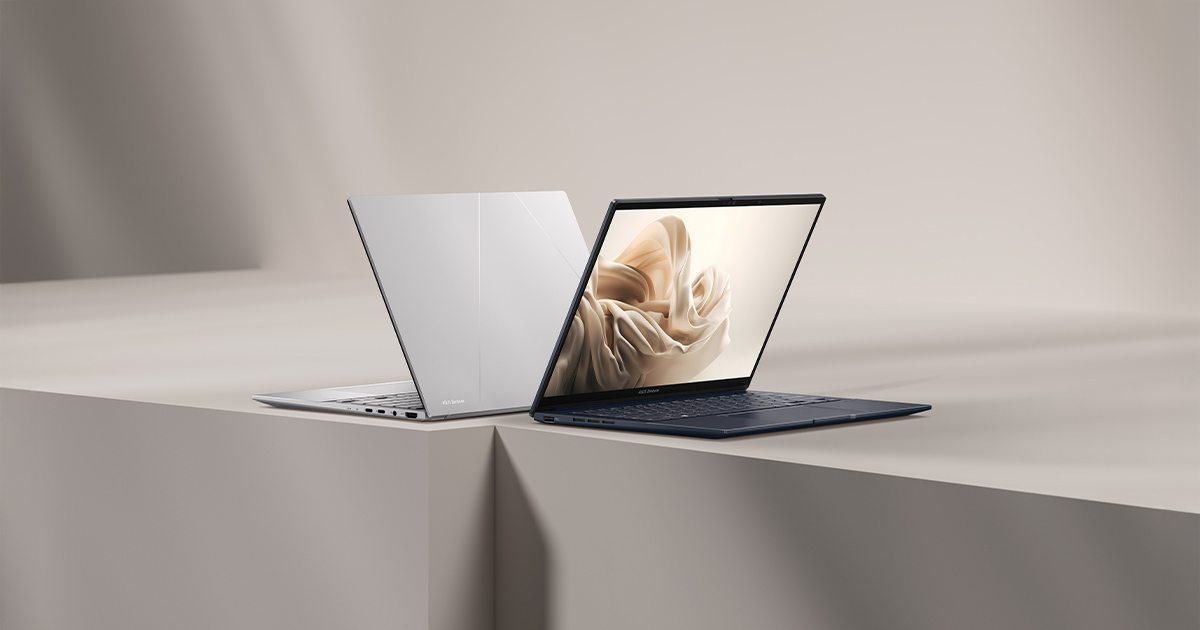
The laptop CPU conversation used to be simple: Intel or AMD, and the difference mostly came down to a handful of benchmark points. That's no longer true. Our catalog spans all three of today's major mobile platforms — Intel Core Ultra, AMD Ryzen AI, and Apple Silicon — across laptops as different as the Zenbook 14 OLED, the Vivobook S14, and the MacBook Air (M2), and the differences between platforms now run much deeper than raw clock speeds.
Intel Core Ultra: the broadest lineup
Intel's Core Ultra chips show up across the widest range of our catalog, from the Zenbook 14 OLED's efficiency-focused Core Ultra 9 285H to the Razer Blade 16's higher-performance Core Ultra 9 386H. That breadth is Intel's real advantage right now: whether a laptop maker wants to build an ultraportable or a full gaming rig, there's a Core Ultra variant tuned for that job, with a consistent software and driver ecosystem across both.
AMD Ryzen AI: the efficiency and integrated-graphics leader
AMD's current mobile lineup, represented in our catalog by the Vivobook S14's Ryzen AI 9 HX 370 and the ROG Zephyrus G14's Ryzen 9 8945HS, has built a genuine reputation for two specific strengths: the Radeon 890M integrated graphics found in the higher-end Ryzen AI chips currently outperform Intel's integrated Arc graphics in most games, and AMD's efficiency tuning tends to translate into strong battery life even in thinner chassis. For a buyer who wants light gaming capability without a discrete GPU, AMD's current integrated graphics are the stronger starting point.
Apple Silicon: the different set of rules entirely
The MacBook Air's M2 chip plays by a different rulebook than either Windows platform — Apple's unified memory architecture, custom media encoders, and tight vertical integration between chip and OS produce battery life and thermal efficiency that neither Intel nor AMD's current mobile chips fully match, even without a fan. The tradeoff is platform lock-in: Apple Silicon only runs macOS, ruling it out immediately for anyone who needs Windows-only software for work, school, or gaming.
Gaming performance across platforms
For discrete-GPU gaming laptops specifically, the CPU platform matters less than the GPU pairing — both the AMD-powered ROG Strix G16 and the Intel-powered Blade 16 pair their respective CPUs with capable NVIDIA GPUs, and in practice neither CPU platform meaningfully bottlenecks a modern RTX-class GPU at these performance tiers. The GPU tier you choose matters far more for gaming performance than which CPU platform sits alongside it — a genuinely counterintuitive finding for buyers used to CPU benchmarks driving most purchasing decisions in the desktop world.
The NPU question: how much does on-device AI actually matter
All three platforms now ship a dedicated neural processing unit for on-device AI tasks — background blur and eye-contact correction in video calls, local image upscaling, and increasingly, on-device transcription and summarization. In day-to-day use, the practical difference between Intel's, AMD's, and Apple's current NPU implementations is smaller than the marketing around each suggests; what actually shapes daily performance is still the CPU cores, GPU, and memory architecture, not the NPU specifically, at least for now.
Software compatibility: the deciding factor for many buyers
For a meaningful share of buyers, the platform decision isn't really about benchmarks at all — it's about which software they need to run. Windows-only engineering, CAD, and some professional creative tools rule out Apple Silicon outright, regardless of how efficient the M2 chip is. Conversely, buyers already invested in Apple's ecosystem, or who specifically want Final Cut Pro's tight Apple Silicon optimization, have a real reason to choose Apple Silicon even if a Windows laptop scores better on a specific benchmark.
Upgradeability and long-term ownership
Across all three platforms, mobile chips increasingly ship with soldered, non-upgradeable memory — true of the Vivobook S14's LPDDR5X, the Zenbook 14 OLED's LPDDR5x, and the MacBook Air's unified memory alike. This is a platform-wide trend rather than a difference between Intel, AMD, and Apple specifically, and it means the memory configuration you choose at purchase across any of these three platforms is the one you're committed to for the life of the machine. We cover this exact tradeoff in more depth in our soldered vs. upgradeable RAM guide.
Price and value across the three platforms
None of the three platforms is inherently more or less expensive — pricing depends far more on the specific laptop's build quality, display, and positioning than on which chip sits inside it. The Vivobook S14's AMD platform delivers strong value at $1,099, the Zenbook 14 OLED's Intel platform sits at a moderate $1,299 premium for its display and CPU headroom, and the MacBook Air's Apple Silicon platform starts at $1,199 with battery life that neither Windows laptop fully matches.
Driver stability and day-one compatibility
An underappreciated difference between the two Windows platforms is driver maturity. Intel's integrated graphics drivers have historically shipped with more day-one bugs in new game releases than either AMD's or NVIDIA's, though Intel has meaningfully closed that gap over recent driver cycles. AMD's Radeon drivers for its integrated graphics benefit from the same driver team that supports its discrete desktop GPUs, which tends to mean faster day-one patches for new game releases. Apple sidesteps this entire category of problem by controlling both the hardware and the software stack, though that same control is exactly what limits which software can run on it in the first place.
Thermal design and fan noise across platforms
Because Apple Silicon is dramatically more power-efficient at a given performance level, the MacBook Air needs no fan at all for its target workloads, resulting in genuinely silent operation that neither Windows platform can currently match in a comparably thin chassis. Both Intel Core Ultra and AMD Ryzen AI laptops in our catalog use active cooling, and fan noise under sustained load is more a function of a specific laptop's chassis and cooling design than of the CPU platform itself — the thin-and-light Zenbook 14 OLED and the thicker gaming-focused Strix G16 behave very differently under load despite both ultimately using conventional fan-based cooling.
Our recommendation
If you need the widest range of chassis sizes and use cases from ultraportable to full gaming rig, Intel's Core Ultra lineup currently covers the broadest span. If integrated graphics performance and battery efficiency in a thin chassis matter most, and you're staying on Windows, AMD's Ryzen AI platform is currently the stronger pick. And if you're already invested in Apple's ecosystem and don't need Windows-only software, Apple Silicon remains the efficiency and battery-life benchmark the other two platforms are still chasing. There is no universally "best" platform here — only the one that fits your specific software needs and use case.