What Is an NPU, and Does It Actually Matter for Your Next Laptop in 2026?
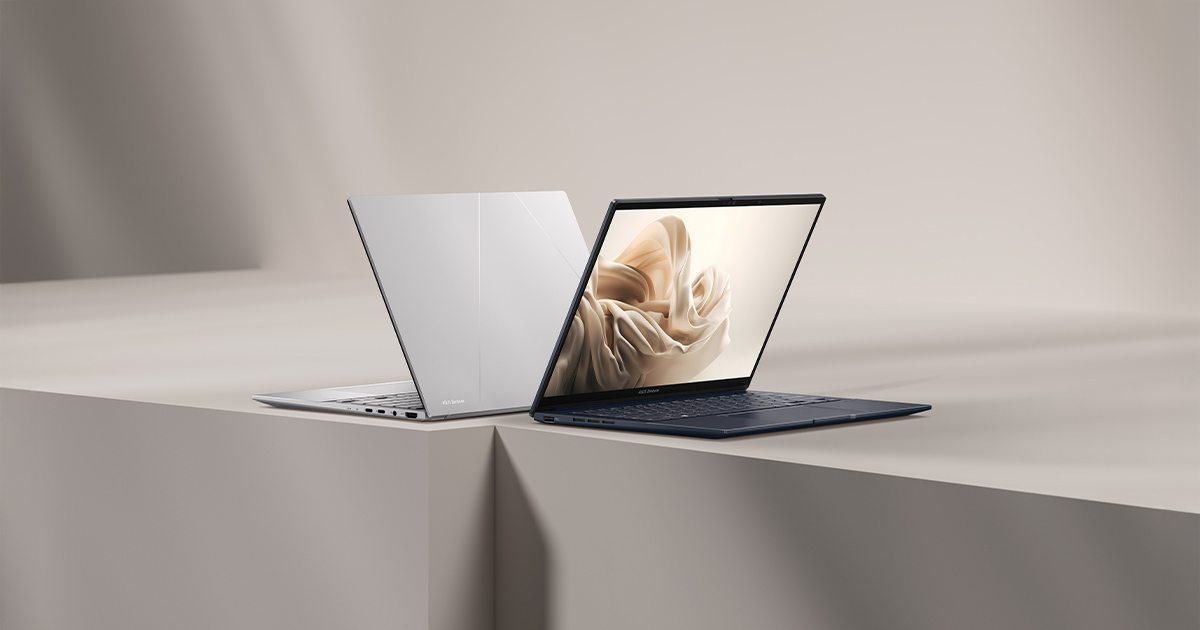
Every laptop CPU maker now talks about "AI performance," but the marketing rarely explains what's actually happening inside the chip. The short answer: modern processors increasingly ship with a dedicated NPU — a Neural Processing Unit — a small piece of silicon built specifically to run AI inference workloads far more efficiently than a general-purpose CPU core or even a GPU. Our catalog spans several different approaches to this, from the Zenbook 14 OLED's Intel Core Ultra platform to the Vivobook S14's AMD Ryzen AI chip, and understanding what the NPU actually buys you is more useful than chasing a marketing term.
What an NPU actually does
An NPU is purpose-built for the specific math behind neural network inference — running an already-trained AI model, not training one from scratch. That covers tasks like real-time background blur and eye-contact correction in video calls, live captioning and translation, local image generation and editing, and increasingly, on-device features baked into the operating system itself. The key advantage over running the same workload on a CPU or GPU is power efficiency: an NPU can do the same inference work using a fraction of the energy, which matters enormously on a battery-powered laptop.
The Copilot+ PC threshold: 40 TOPS
Microsoft set a specific bar for what it calls a Copilot+ PC: an NPU rated at a minimum of 40 TOPS (trillion operations per second), the throughput needed to run certain on-device Windows AI features like Recall and Live Captions locally rather than sending data to the cloud. This threshold matters practically because it splits recent "Core Ultra" and "Ryzen AI" branded laptops into two real categories — chips that clear the bar and unlock the full on-device AI feature set, and earlier-generation chips that carry similar branding but fall short of it.
AMD's Ryzen AI: an early mover on NPU throughput
The Ryzen AI 9 HX 370 found in our Vivobook S14 uses AMD's XDNA 2 NPU architecture, rated at 50 TOPS — comfortably clearing the Copilot+ threshold with headroom to spare. AMD was notably aggressive about NPU throughput in this generation, and it shows up as a genuine practical advantage for Vivobook S14 owners running on-device AI features, not just a number on a spec sheet nobody checks.
Intel's generational NPU story is messier
Intel's Core Ultra branding spans multiple NPU generations with meaningfully different capabilities, which is genuinely confusing for shoppers. Earlier Core Ultra H-series chips, like the Core Ultra 9 285H in our Zenbook 14 OLED, ship with an NPU that falls short of the 40 TOPS Copilot+ bar despite carrying the same "Core Ultra" name as chips that do qualify. Intel's newest Core Ultra generation — the kind found in flagship 2026 laptops like the Razer Blade 16 — moves the NPU to a newer architecture built specifically to clear that threshold. The practical lesson: "Core Ultra" alone doesn't tell you whether a specific laptop is a Copilot+ PC — you have to check the specific chip model.
Apple's different approach: the Neural Engine
Apple doesn't use "NPU" branding at all, but every M-series chip has shipped with a dedicated Neural Engine since long before "AI PC" became a marketing category. The M2 in our MacBook Air packs a 16-core Neural Engine rated at 15.8 TOPS, handling on-device tasks like Photos' subject recognition, Live Text, and voice processing for Siri without a cloud round-trip. Apple's numbers look lower than AMD's or the newest Intel chips on paper, but Apple's tighter hardware-software integration means direct TOPS comparisons across platforms are less meaningful than they first appear — the same task can require different amounts of raw throughput depending on how well the software is optimized for that specific silicon.
Why not just use the GPU or CPU for AI tasks?
Both the CPU and the discrete or integrated GPU can technically run AI inference workloads, and for years that's exactly what happened by default — a background-blur filter or an image upscaler would simply borrow GPU cycles. The problem is efficiency: a GPU is built for parallel graphics math, and while it can be repurposed for neural network inference, it draws far more power doing so than a chip purpose-built for the job. On a laptop, that difference shows up directly as battery drain and fan noise during something as simple as a video call with background blur enabled. The NPU exists specifically to take that workload off the CPU and GPU entirely, running it in a lower-power silicon block designed for nothing else, which is why it matters more for laptops than for desktops where battery life and cooling headroom aren't constraints in the same way.
Does the NPU actually matter for your next laptop?
For most buyers today, honestly: not as much as the marketing suggests, yet. The killer on-device AI applications that would make NPU throughput a decisive purchase factor are still emerging, and a laptop with a weaker NPU will still run every current application just fine — it simply won't unlock certain newer OS-level AI features, or will offload them to the cloud instead of running them locally. Where it matters more is battery life during any AI-adjacent workload you do use today, like video call background effects, since an NPU handles that far more efficiently than forcing the CPU or GPU to do it.
How to actually shop by this spec
If on-device AI features matter to you specifically, check the exact chip model against Microsoft's Copilot+ certification list rather than trusting "Core Ultra" or "Ryzen AI" branding alone — both cover chips on either side of the 40 TOPS line. If you're buying primarily for gaming, creative work, or general productivity, NPU throughput should sit well below GPU performance, display quality, and memory configuration on your list of priorities; it's a genuinely useful feature getting more useful every year, but it's not yet the deciding factor most marketing implies it should be. We compare the three major mobile platforms in more depth, NPU included, in our Intel vs. AMD vs. Apple Silicon guide.