OLED vs. IPS Gaming Laptop Displays in 2026: Is the Contrast Actually Worth It?
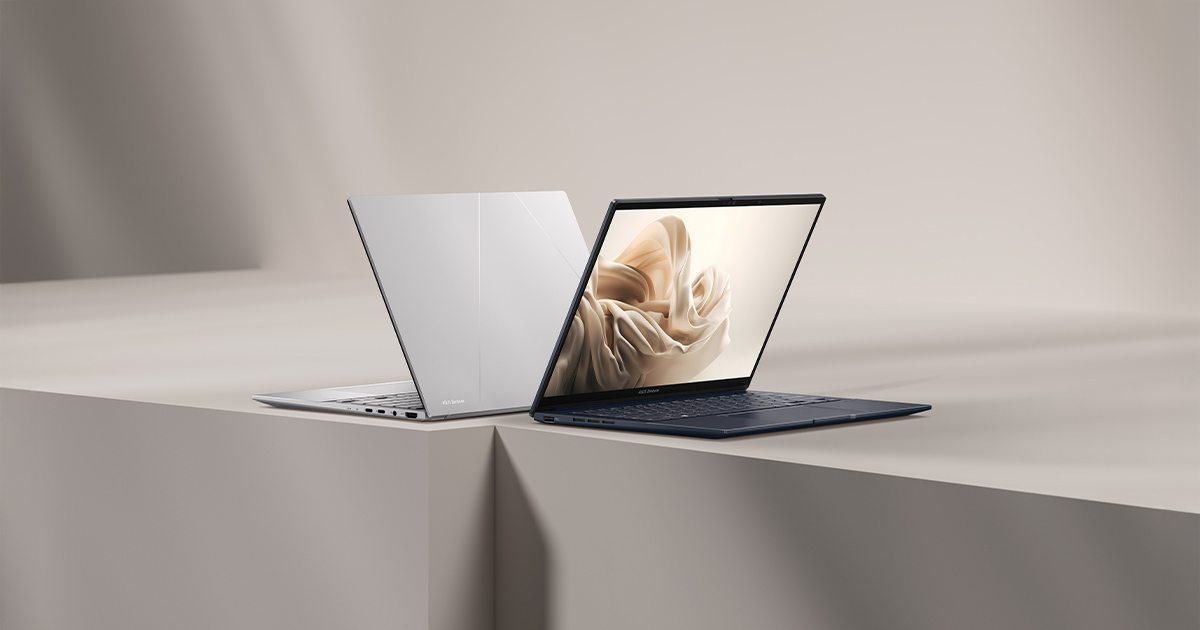
For years, buying an OLED gaming laptop meant accepting a real tradeoff: gorgeous per-pixel contrast and color, but a refresh rate that lagged behind what a comparable IPS panel could hit, plus a lingering worry about burn-in on static HUD elements. That tradeoff has largely dissolved over the last two hardware generations, but the decision between OLED and IPS in a gaming laptop is still more nuanced than "OLED is strictly better," and it's worth understanding what you're actually trading before paying the OLED premium.
What OLED actually buys you
The Razer Blade 16 (2026) is the clearest example in our catalog of OLED done right for gaming: a 240Hz QHD+ OLED panel that delivers true per-pixel blacks without sacrificing the refresh rate competitive players want. That combination used to force a choice — OLED contrast or high refresh rate — and Razer's flagship demonstrates that modern OLED gaming panels have closed that gap. The practical benefit shows up most obviously in darker games and general media consumption, where true blacks make a visible difference that IPS, even very good IPS, can't fully replicate.
The case IPS still makes for itself
The ASUS ROG Strix G16 (2025) sticks with a 240Hz IPS panel at 2.5K resolution, and it's not simply a budget compromise — IPS carries zero burn-in risk for anyone who leaves a static HUD or UI element on screen for extended competitive sessions, a real consideration for esports-focused players who run the same game for hundreds of hours. IPS panels have also continued improving on color accuracy and peak brightness, narrowing the gap with OLED in situations outside of pure contrast and black level.
OLED without sacrificing portability: the Zephyrus example
The ASUS ROG Zephyrus G14 (2024) shows OLED's other strength: a 3K 120Hz OLED panel paired with a mid-tier RTX 4060 GPU, where 120Hz is more than sufficient for the frame rates that GPU tier realistically sustains at that resolution. This pairing illustrates an important buying principle — OLED's refresh rate ceiling matters less if your GPU can't push frames fast enough to hit it anyway, which is exactly the case on a more modest GPU configuration.
Burn-in risk in 2026: smaller than it used to be, but not zero
Modern OLED panels include pixel-shifting, dimming algorithms, and other mitigation technology that has meaningfully reduced burn-in risk compared to early OLED laptop displays, but the risk isn't fully eliminated for extreme edge cases — years of daily use with the same static taskbar or HUD element at maximum brightness. For the vast majority of buyers who use a laptop for a mix of gaming, browsing, and general productivity, this risk is now low enough to not be a primary purchase-deciding factor, but competitive players who run the identical game interface for thousands of hours should still weigh it.
Price premium: what OLED actually costs across the lineup
Comparing the OLED-equipped Blade 16 ($3,499) against the IPS-equipped Strix G16 ($1,899) isn't a clean apples-to-apples GPU or display comparison, since the Blade 16 also carries a higher GPU tier and premium chassis materials. A more precise read comes from comparing panel technology within otherwise similar tiers — OLED gaming panels typically carry a meaningful premium over an equivalent-resolution IPS panel, often in the hundreds of dollars, which is worth weighing against how much you'll actually notice the contrast difference in your typical use case.
Color accuracy for creative work, not just gaming
For buyers who also use their gaming laptop for photo or video editing, OLED's wide color gamut and deep contrast make a genuine difference beyond gaming itself. The Zephyrus G14's OLED panel, in particular, is accurate enough for casual color-sensitive creative work without needing an external reference monitor, a secondary benefit that's easy to overlook when evaluating a panel purely on gaming merits like refresh rate and response time, but one that meaningfully expands what the machine is realistically useful for beyond gaming alone.
How panel choice interacts with GPU tier
Pairing display technology with GPU tier matters as much as picking either one in isolation. A high-refresh OLED panel paired with a GPU that can't consistently hit that refresh rate in demanding titles leaves performance on the table relative to what you paid for the display, while a modest IPS panel paired with a top-tier GPU may undersell what that GPU is actually capable of. The best-matched configurations in our catalog, like the Blade 16's OLED-and-RTX-5070-Ti pairing, deliberately align both specs to the same realistic performance ceiling, which is a good template to apply when evaluating any laptop's display and GPU together rather than separately.
Frequently asked questions
Is OLED worth the premium for competitive gaming? Not necessarily — if you play the same title with a static HUD for extended hours, a high-refresh IPS panel avoids burn-in risk entirely while still delivering excellent motion clarity. Does OLED use more battery than IPS? It depends heavily on content — OLED is more efficient displaying dark content since black pixels draw no power, but less efficient than IPS on bright, white-heavy content like document editing. Will OLED gaming laptops keep getting cheaper? The trend over recent generations has been toward OLED becoming standard on more mid-tier models, so the premium has been narrowing, though flagship-tier panels still carry the largest markup.
Viewing angles and outdoor visibility
One underrated OLED advantage is viewing angle consistency — colors and contrast hold up far better off-axis than on most IPS panels, which matters if you frequently show your screen to someone beside you or work from awkward angles. On the flip side, IPS panels with high peak-brightness ratings can still be easier to use in bright outdoor or sunlit conditions, where OLED's lower sustained brightness in some implementations can leave content looking comparatively dim, so frequent outdoor laptop users should weigh that tradeoff carefully before assuming OLED is the universally better pick.