Razer Blade 14 (2024) vs. Blade 16 (2026): Which Compact Razer Should You Buy?
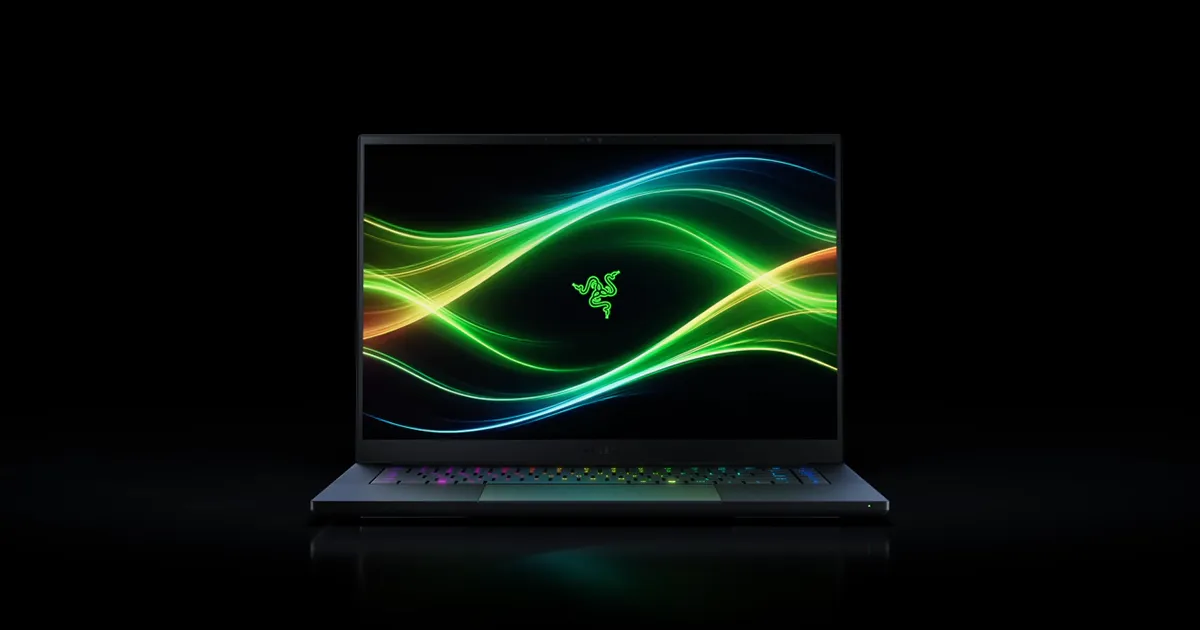
Razer's Blade lineup has always sold on a specific promise: a gaming laptop that doesn't look or feel like one, built from CNC-milled aluminum instead of the plastic-and-RGB approach most rivals take. Two very different generations of that promise sit in our catalog right now — the Blade 14 (2024) and the Blade 16 (2026) — and cross-shopping them raises a genuinely interesting question about how much chassis size still matters once you're already paying a premium for build quality.
The hardware, side by side
The Blade 14 pairs an 8-core AMD Ryzen 9 8945HS with an RTX 4070 laptop GPU (8GB, 140W), 32GB of DDR5 memory, and a 14-inch QHD+ panel running at 240Hz on IPS. The Blade 16 moves to a completely different platform: a 16-core Intel Core Ultra 9 386H, a newer RTX 5070 Ti laptop GPU, the same generous 32GB of memory (this time faster LPDDR5X-9600), and a larger 16-inch QHD+ OLED panel, also at 240Hz. That's not a minor spec bump — it's a different CPU vendor, a newer GPU tier, and a jump from IPS to OLED all at once.
Size, weight, and the case for staying compact
At 1.84kg, the Blade 14 remains one of the few genuinely compact laptops that still fits a serious discrete GPU without feeling like a compromise — it travels closer to an ultrabook than a gaming rig despite the RTX 4070 inside. The Blade 16 trades that portability for a larger 16-inch chassis built to accommodate a more powerful GPU and better sustained cooling, and it's noticeably bulkier in a backpack as a result. If you regularly carry your laptop to a coffee shop, a LAN party, or between home and office, the Blade 14's size advantage is not a minor convenience — it's the main reason to consider it over its bigger sibling at all.
GPU performance: RTX 4070 vs. RTX 5070 Ti
The generational gap between the Blade 14's RTX 4070 and the Blade 16's RTX 5070 Ti is real and shows up clearly in demanding titles at each laptop's native resolution — the Blade 16 pushes meaningfully higher frame rates and handles ray tracing with less of a performance hit. That said, the Blade 14's RTX 4070 is still a genuinely capable GPU for 1440p-class gaming at high settings, and the gap matters most if you're chasing the highest possible frame rates in the newest, most demanding releases rather than solid performance across the board.
Display: fast IPS vs. OLED contrast
Both panels run at 240Hz, so neither laptop compromises on smoothness, but the underlying panel technology differs meaningfully. The Blade 14's IPS panel is bright and color-accurate without the risk of OLED burn-in on static UI elements, while the Blade 16's OLED panel delivers true blacks and richer contrast that make a real difference in darker games and film content. We cover this exact tradeoff at more length in our OLED vs. IPS buying guide, which applies directly to this comparison.
Platform choice: AMD Ryzen vs. Intel Core Ultra
This is one of the more unusual aspects of comparing these two Blades: Razer switched CPU platforms between generations, so buyers aren't just choosing a chassis size, they're also choosing between AMD's Ryzen 9 8945HS and Intel's newer Core Ultra 9 386H. In practice, both are strong 2024-2026 era mobile chips, and the more relevant difference for most buyers is less about raw CPU benchmarks and more about which GPU tier and display technology each chip happens to be paired with in these specific configurations.
Battery life and thermals
The Blade 16's larger 95.2Wh battery gives it a real edge in absolute battery capacity over the Blade 14's 68.1Wh unit, though a more powerful RTX 5070 Ti and larger OLED panel both draw more power, so the advantage doesn't translate one-to-one into longer unplugged gaming time. Where the Blade 16's larger chassis pays off more clearly is thermals: more internal volume for fans and heat pipes means it can sustain higher clock speeds for longer during extended gaming sessions without throttling as aggressively as a more compact design has to.
Price and who should buy which
At $2,699, the Blade 14 undercuts the $3,499 Blade 16 by $800 while still delivering a genuinely capable RTX 4070 gaming experience in a far more portable shell. Buyers who want the best possible frame rates, an OLED panel, and don't mind the extra size and cost should lean toward the Blade 16; buyers who want a gaming laptop that still functions as an everyday-carry machine, and who are willing to trade some raw GPU headroom for that portability, should lean toward the Blade 14.
Build quality and the Razer identity
Both laptops share Razer's signature CNC-milled aluminum unibody construction and understated black finish with the illuminated triple-headed snake logo — there's no version of either Blade that looks cheap or generic sitting on a desk. The main visual difference buyers will notice day to day is simply scale: the Blade 16's larger keyboard deck and trackpad feel more like a desktop-replacement workstation, while the Blade 14 keeps a tighter, more travel-friendly footprint without sacrificing the same build materials.
Ports and expansion
The larger Blade 16 chassis has room for a more complete port selection without needing a dongle for most peripherals, while the Blade 14's smaller frame trims a little connectivity in exchange for its size advantage. Both include modern USB-C with DisplayPort and power delivery, making either one reasonably dock-friendly for a single-cable desk setup, which matters if you plan to use the laptop as your primary machine both on the go and at a desk.
Our verdict
If we had to summarize it in one sentence: the Blade 14 is still the better answer for buyers who genuinely value portability and don't need the absolute newest GPU tier, while the Blade 16 is the better answer for buyers who want Razer's best available gaming performance and display technology and are willing to carry the extra bulk and cost for it. Neither is a wrong choice within Razer's own lineup — they're simply built around different tradeoffs between raw performance and everyday portability, and the eight-hundred-dollar price gap between them roughly tracks that difference in ambition.