ASUS ROG Strix G16 vs. ROG Zephyrus G14 (2026): Which ASUS Gaming Laptop Should You Buy?
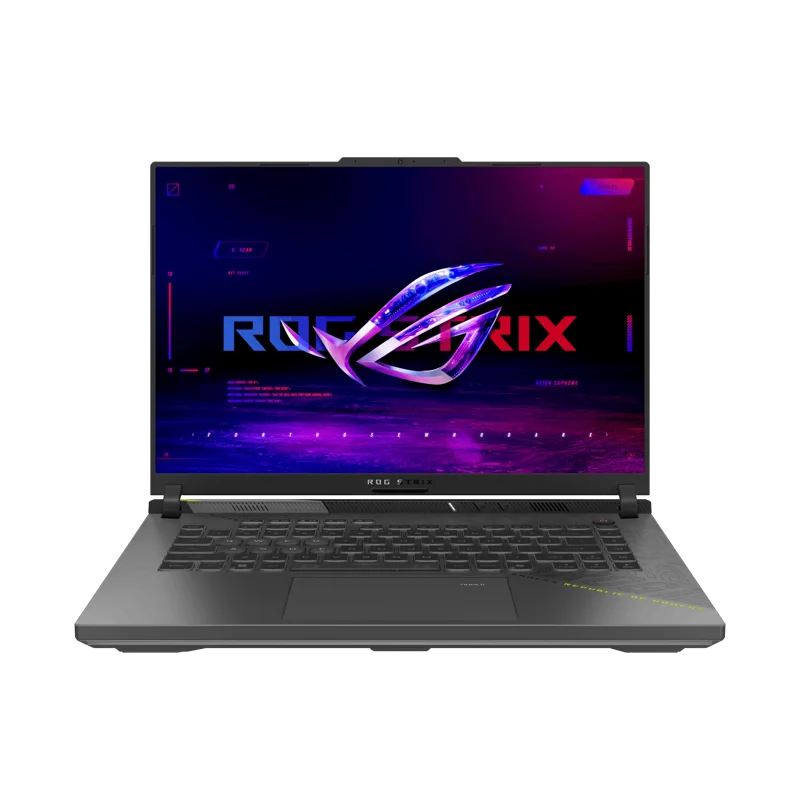
ASUS sells two very different answers to the question "what should a gaming laptop be" within its own ROG lineup, and both are in our test catalog: the ROG Strix G16 (2025) and the ROG Zephyrus G14 (2024). Cross-shopping them is one of the more common dilemmas we hear about from readers, because on paper they look like they're competing for the same buyer — in practice, they're built around almost opposite priorities.
The hardware, side by side
The Strix G16 pairs a 16-core AMD Ryzen 9 9955HX3D with an RTX 5070 carrying 8GB of GDDR7, a 16-inch 2.5K 240Hz IPS panel, and 16GB of upgradeable DDR5-5600 memory. The Zephyrus G14 steps down slightly on raw GPU horsepower with an RTX 4060 (8GB GDDR6), but pairs it with a smaller 14-inch 3K OLED panel at 120Hz, a more efficient 8-core Ryzen 9 8945HS, and a considerably more generous 32GB of soldered LPDDR5X memory out of the box.
Size and weight: the real dividing line
This is where the two laptops actually diverge. The Strix G16 weighs 2.5kg and is built around a 16-inch chassis that makes no apologies for being a proper gaming laptop, RGB lighting and all. The Zephyrus G14 weighs just 1.5kg — a full kilogram lighter — in a 14-inch shell restrained enough to look at home in an office. If you regularly carry your laptop around, that kilogram is the single biggest factor in this comparison, arguably bigger than any spec on the sheet.
Gaming performance: more raw power vs. better balance
The RTX 5070 in the Strix G16 is a genuinely newer, more capable GPU than the Zephyrus G14's RTX 4060, and it shows in benchmarks — the Strix G16 pushes noticeably higher frame rates at its native 2.5K resolution across demanding titles. But the Zephyrus G14 isn't trying to win that fight; its OLED panel caps out at 120Hz, a frame rate the RTX 4060 can realistically sustain in most games, so the pairing feels intentional rather than compromised. Neither laptop leaves its GPU under-fed by its display, which is more than can be said for some rivals in this category.
Display quality: IPS speed vs. OLED contrast
The Strix G16's 240Hz IPS panel is built for competitive gaming where frame rate matters more than absolute contrast, while the Zephyrus G14's OLED panel trades some of that ceiling for true blacks, richer color, and a display that doubles far better for photo or video work on the side. We cover this exact tradeoff in more depth in our OLED vs. IPS buying guide, which is worth reading if display quality is the deciding factor for you.
Memory: 16GB upgradeable vs. 32GB soldered
This is one of the more interesting philosophical splits between the two: the Strix G16 ships with a more conservative 16GB but leaves it upgradeable to 64GB, while the Zephyrus G14 ships with a generous 32GB that's soldered and fixed for the life of the machine. Buyers who expect to need more memory a few years down the line get a fixable problem on the Strix G16 and a hard ceiling on the Zephyrus G14 — though the Zephyrus G14's starting point is already double what most buyers will need today.
Battery life and everyday usability
Neither laptop is built primarily around battery life, but the Zephyrus G14's smaller, more efficient chip and lighter chassis give it a real edge away from the charger for general productivity work, closer to what you'd expect from a good ultrabook than a gaming laptop. The Strix G16's 90Wh battery is larger in absolute terms, but the more power-hungry components mean it doesn't translate into meaningfully longer unplugged time during actual use.
Price and who should buy which
At $1,899, the Strix G16 undercuts the $1,599 Zephyrus G14 in... actually, the Zephyrus G14 is the cheaper of the two despite its more premium OLED panel and larger memory allotment, largely because ASUS positions it as a portability-first product rather than a pure performance flagship. Buyers chasing the highest frame rates at 2.5K resolution and who don't mind the extra bulk should lean toward the Strix G16; buyers who want a gaming laptop that doesn't feel like a burden to carry, and who'll appreciate the OLED panel for non-gaming use too, should lean toward the Zephyrus G14.
Build quality and design language
ASUS gives the two laptops distinctly different personalities: the Strix G16 leans into an aggressive gamer aesthetic with an AniMe Matrix-style lid option and RGB keyboard lighting, while the Zephyrus G14 opts for a more restrained aluminum design that doesn't draw attention in a professional setting. Neither approach is objectively better — it comes down to whether you want your laptop to look the part of a gaming machine or blend into a coffee shop or boardroom without a second glance.
Ports and connectivity
The larger Strix G16 chassis has room for a more complete port selection, including full-size HDMI 2.1, a 2.5Gbps Ethernet jack that's genuinely useful for competitive online play, and multiple USB-A ports alongside USB-C with DisplayPort. The Zephyrus G14 trims Ethernet in exchange for its thinner profile, leaning more on USB-C and Wi-Fi 6E — a reasonable tradeoff given the portability-first design brief, but worth checking if a wired connection matters to you.
Our verdict
If we had to summarize the choice in one sentence: buy the Strix G16 if raw gaming performance and a larger, faster-refreshing display matter more to you than portability, and buy the Zephyrus G14 if you want a genuinely excellent gaming laptop that you'd also be happy to carry around all day without a second thought. Both are among the stronger options in ASUS's current lineup — this isn't a comparison with a clearly worse option, just two different sets of priorities wearing the same ROG badge. Whichever you pick, both back their positioning with hardware that actually delivers on it, rather than a spec sheet that only looks good until you've used the machine for a week.