ROG Zephyrus G14 vs. Razer Blade 14 (2026): The Compact Gaming Laptop Showdown
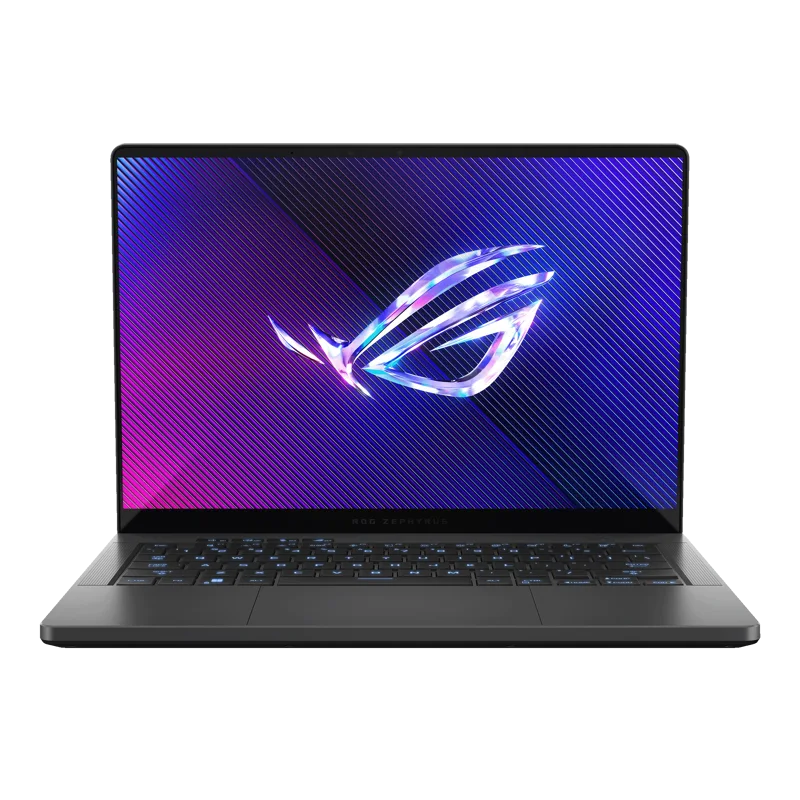
The ASUS ROG Zephyrus G14 and the Razer Blade 14 both promise the same basic pitch: a genuinely portable, 14-inch chassis that still packs enough graphics power to run modern games at real settings. What makes the comparison unusually direct is that, on paper, they share their most important spec. Both machines ship with the exact same AMD Ryzen 9 8945HS processor, an 8-core, 16-thread chip that clocks up to 5.2GHz. That single shared detail strips away one whole axis of the usual laptop-shopping confusion and leaves a cleaner question: given identical CPU horsepower, where do these two 14-inch machines actually diverge, and which set of tradeoffs is worth paying for?
Same CPU, Very Different Machines
It's worth sitting with how unusual this is. Laptop manufacturers rarely converge on the exact same silicon at the exact same moment, but ASUS and Razer both built their 2024 compact gaming flagships around the Ryzen 9 8945HS. That means every difference you'll read about below is a genuine design decision, not a byproduct of a faster or slower processor. Razer and ASUS took that identical starting point and built two philosophically different laptops around it: one tuned toward color-accurate, high-resolution creative and gaming work, the other tuned toward raw frame-rate ceiling and a more premium metal chassis.
Display: OLED Contrast vs. High-Refresh IPS
This is where the two laptops split hardest. The Zephyrus G14 uses a 14-inch 3K (2880x1800) OLED panel running at 120Hz, with the deep per-pixel black levels and wide color gamut that OLED is known for. It's the more versatile screen if you split your time between gaming, photo or video editing, and general productivity, since OLED's contrast and color accuracy pay off outside of games too. The Blade 14, by contrast, uses a 14-inch QHD+ (2560x1600) IPS panel that runs at a considerably faster 240Hz. For competitive, fast-paced titles, that refresh-rate ceiling genuinely matters in a way panel technology alone doesn't fully offset — smoother motion clarity and lower perceived input lag are real, measurable advantages IPS-at-240Hz has over OLED-at-120Hz, even though OLED wins comfortably on static image quality, contrast, and color.
GPU and Gaming Performance: RTX 4060 vs. RTX 4070
The graphics silicon is the other major divergence, and it doesn't run in the same direction as the price gap would suggest at first glance. The Zephyrus G14 pairs its Ryzen 9 with an RTX 4060 (8GB GDDR6), while the Blade 14 steps up to an RTX 4070 8GB (140W), a meaningfully higher power envelope that translates into a real frame-rate advantage at the same settings — commonly somewhere in the 20-30% range depending on the title and how thermally constrained each chassis is. Combined with its 240Hz panel, the Blade 14 is clearly the machine built to chase frame rate. The Zephyrus G14's RTX 4060 is still a genuinely capable 1440p-class gaming GPU, it's just not chasing the same ceiling, and ASUS is betting that most buyers in this segment care more about the OLED panel and all-day usability than the last 20% of frame-rate headroom.
Weight, Battery, and Everyday Portability
Despite sharing a 14-inch footprint, these two laptops feel different in a backpack. The Zephyrus G14 weighs 1.5kg with a 73Wh battery, while the Blade 14 weighs 1.84kg with a smaller 68.1Wh battery. That's a real, noticeable 340-gram difference — roughly the weight of a full water bottle — plus more battery capacity in the lighter machine. ASUS also uses onboard LPDDR5X-6400 memory clocked meaningfully faster than the Blade 14's DDR5, which helps integrated and GPU-adjacent memory bandwidth in some workloads, though it comes at the usual soldered-RAM cost of zero upgradeability down the line, a tradeoff we've covered in more depth in our Razer Blade 14 vs. Blade 16 comparison.
Build Quality and the CNC Aluminum Question
Razer's CNC-milled aluminum unibody chassis is one of the most consistently praised aspects of the Blade line, and the Blade 14 carries that reputation forward with a rigidity and finish quality that still reads as premium years after Razer first established the design language. ASUS's Zephyrus G14 chassis is also metal and well-built, but it leans toward a lighter, more travel-focused construction rather than Razer's denser, heavier-feeling unibody. Neither laptop feels cheap, but if chassis rigidity and that specific "milled from a single block" feel matter to you, the Blade 14 has the edge; if minimizing travel weight matters more, the Zephyrus G14 does.
Price: Is the Blade 14 Premium Worth $1,100?
Here's where the comparison gets genuinely difficult to resolve cleanly. The Zephyrus G14 starts around $1,599, while the Blade 14 starts around $2,699 — an $1,100 gap between two laptops sharing the same CPU. Some of that premium is explained by the faster RTX 4070 GPU and the 240Hz panel, and some of it is simply the well-documented "Razer tax" that the brand has carried across its lineup for years. Whether that premium is worth paying depends heavily on what you value: if frame rate and chassis rigidity are the priority, the Blade 14 delivers on both counts. If you want an OLED panel, lighter travel weight, and to keep $1,100 in your pocket, the Zephyrus G14 is very hard to argue against, and it remains one of the more well-rounded picks among the best thin-and-light laptops we've tested.
Which Should You Buy?
If you're a competitive or fast-paced gamer who wants the highest sustained frame rate a 14-inch chassis can deliver, and you don't mind carrying the extra weight and paying the extra money, the Blade 14's RTX 4070 and 240Hz IPS panel make it the more focused gaming tool. If you want a genuinely versatile 14-inch machine that's equally comfortable for creative work, everyday productivity, and gaming — with a superior display technology and a significantly lower price — the Zephyrus G14 is the more sensible buy for most people. Given that both machines are built around identical CPU silicon, this is one of the rare laptop comparisons where you can trust that you're purely choosing a design philosophy rather than compensating for a weaker processor underneath.
One More Thing: Thermals in a Shared Chassis Size
Because both laptops squeeze their hardware into roughly the same 14-inch footprint, cooling design does a lot of the real work in determining which one actually holds its boosted clocks longest under sustained load. Razer's denser unibody has less internal volume for airflow relative to its weight, while ASUS's Zephyrus line has historically favored a wider vapor chamber and liquid-metal thermal compound on higher-end configurations to keep the same Ryzen 9 8945HS running cooler for longer. Neither laptop is going to match a 16-inch chassis for sustained thermal headroom — that's the tradeoff every compact gaming laptop makes — but it's one more reason the on-paper GPU gap between the RTX 4060 and RTX 4070 doesn't always translate into the full expected performance delta once both machines have been running a demanding game for twenty minutes. If sustained, multi-hour gaming sessions are your primary use case rather than shorter bursts, it's worth reading full third-party thermal-throttling benchmarks for your specific configuration before deciding between them.