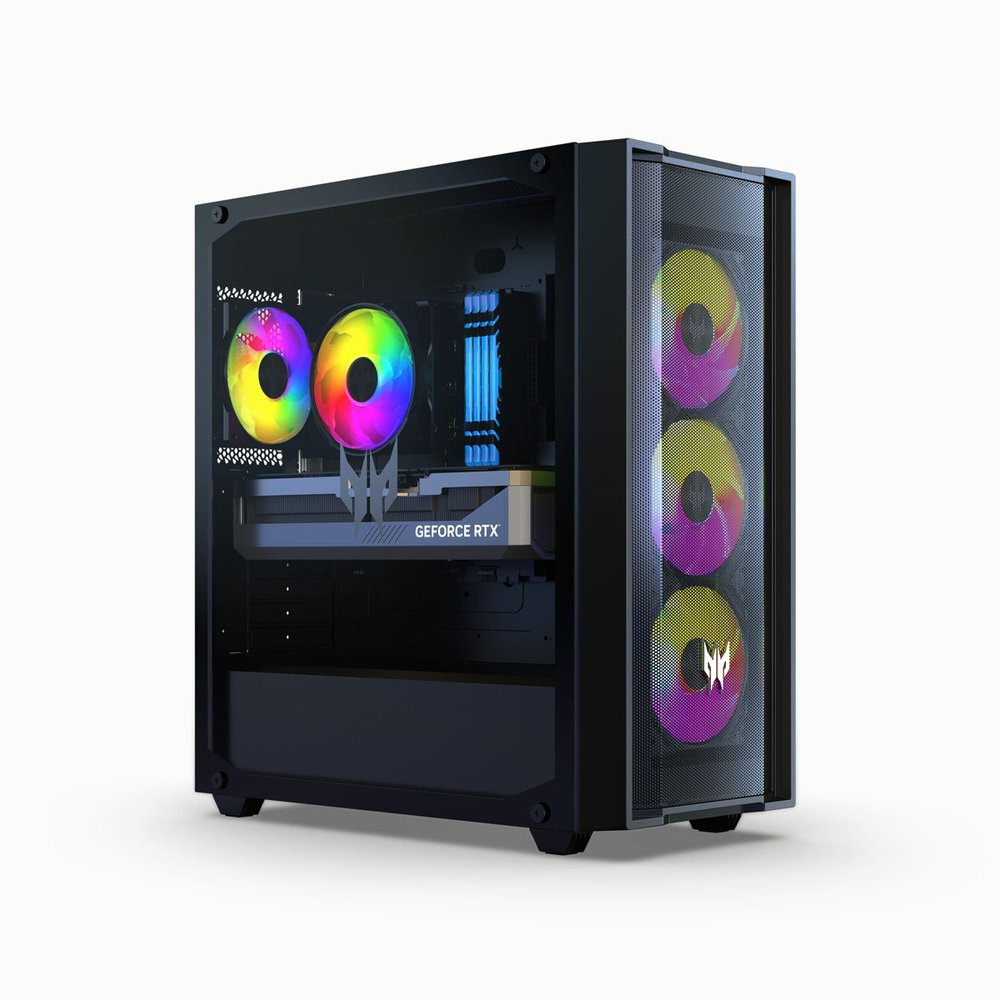
Acer Predator Orion 7000 (PO7-667)
Acer's Predator Orion 7000 (PO7-667): a 45-litre tempered-glass gaming tower with up to an Intel Core Ultra 9 285K, GeForce RTX 5090, 128 GB of DDR5-7200, a 360 mm liquid cooler, a 1200 W power supply and up to 6 TB of SSD storage.
Specifications
| CPU | Up to Intel Core Ultra 9 285K |
|---|---|
| GPU | Up to NVIDIA GeForce RTX 5090, 3352 AI TOPS |
| RAM | Up to 128GB DDR5-7200 XMP RGB |
| Storage | Up to 6TB SSD (1x PCIe Gen 5 + 2x PCIe Gen 4 NVMe M.2); up to 4TB HDD (2x 3.5-inch SATA) |
| Cooling | 360mm CPU liquid cooler + Predator CycloneX 360 fan (Acer: 15% efficiency, -9C motherboard, no baseline stated) |
| Power supply | 1200W |
| Ports | Front: 2x USB 3.2 Gen 2 Type-A, 1x USB 3.2 Gen 2x2 Type-C; rear: 3x USB 3.2 Gen 2 Type-A, 2x USB 2.0, Thunderbolt 4, LAN, audio jacks |
| Wireless | Up to Wi-Fi 7; Killer E3100G 2.5G Ethernet |
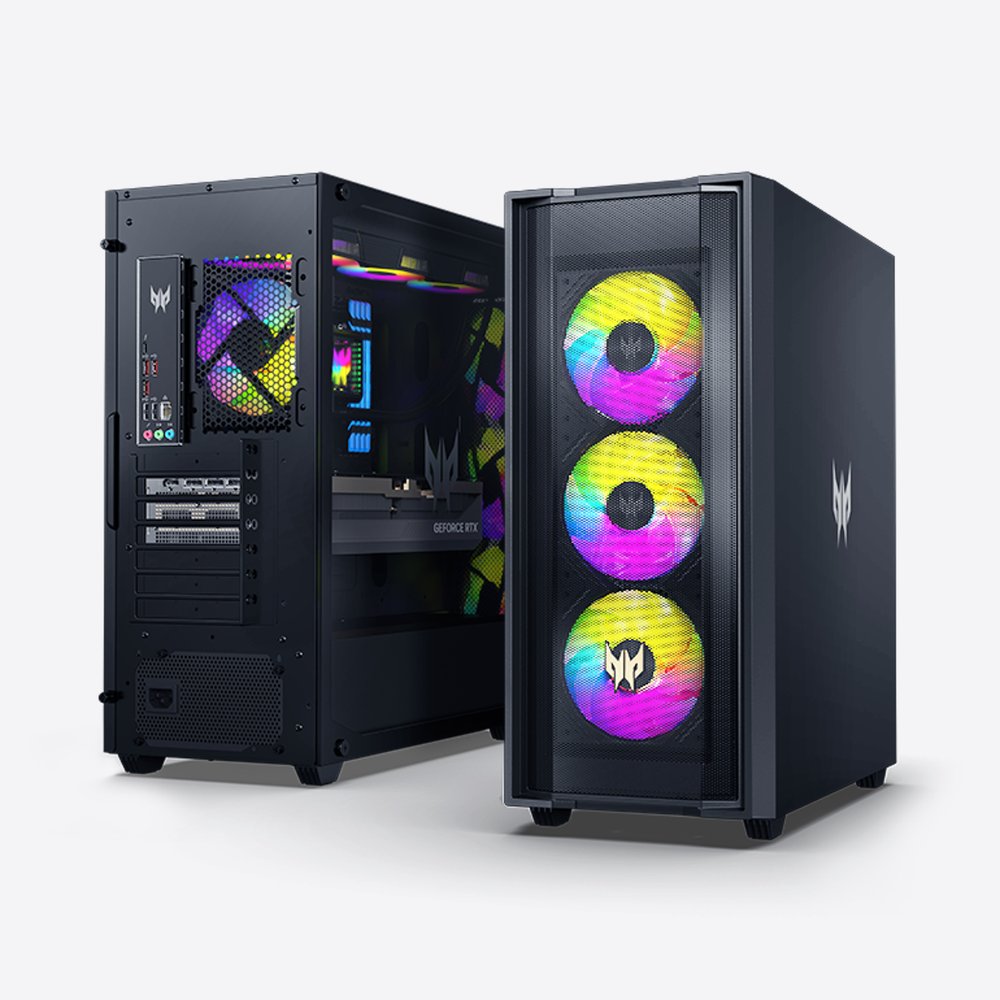
| Chassis | 45L, 216.4 x 461.7 x 495.4mm, tempered glass, ARGB, 65% PCR plastic |
| OS | Windows 11 Home |
Acer announced the Predator Orion 7000, model PO7-667, at IFA in Berlin on 3 September 2025 and positioned it as the top of its two new gaming desktops, "for gamers, content creators and professionals who demand uncompromised power". It is the larger sibling of the Predator Orion 5000 (PO5-667) announced in the same release, sharing its 45-litre chassis but stepping up the processor, graphics, cooling, power supply and storage. This page summarises what Acer published about it, explains the claims Acer attaches to its cooling design, and flags the limits of what the announcement documents.
Processor and graphics
Acer lists up to an Intel Core Ultra 9 processor 285K, which it says has an integrated NPU for AI workloads, and up to an NVIDIA GeForce RTX 5090, rated at 3352 AI TOPS in the specification table. The release says the combination delivers ray-traced visuals and AI capabilities such as DLSS 4 with Multi Frame Generation, and that it gives access to NVIDIA NIM microservices, described as state-of-the-art AI models that let enthusiasts and developers build AI assistants, agents and workflows on NIM-ready systems. The phrase "up to" applies to both parts: the release does not say which configurations are sold in which markets, and it gives no benchmark results or frame rates.
Cooling and the 15 percent claim
Acer's thermal story is built around the Predator CycloneX 360 cooling system together with a CPU liquid cooler; the specification table names it as a 360 mm CPU liquid cooler plus the CycloneX 360 fan. According to the release, the design has a unique fan layout and an open channel structure that boosts cooling efficiency by 15 percent and lowers motherboard temperatures by 9 degrees Celsius. Acer's footnote to those numbers says only that actual performance may differ in real-world environments, and that the performance was tested under various factors in a specialised laboratory, with results varying by model, specification or region. The release does not say what the 15 percent and 9 degrees are measured against, whether it is an earlier Acer desktop or a different fan layout, so neither figure can be independently interpreted. They are best read as Acer's marketing summary, and the missing baseline is the reason not to convert them into a specific expected temperature.
Memory and storage
The memory is up to 128 GB of DDR5 at 7200 MT/s with XMP and RGB lighting. Storage is described as up to 6 TB of SSD, and the specification table breaks that into one PCIe Gen 5 NVMe M.2 SSD and two PCIe Gen 4 NVMe M.2 SSDs. There is room for mass storage too: up to 4 TB of hard-drive capacity via two 3.5-inch SATA 3 drives. The expansion list in the table matches this layout, with one PCIe Gen 5 x16 slot, one M.2 slot for a wireless card, one Gen 5 x4 M.2 SSD slot and two Gen 4 x4 M.2 SSD slots. The release does not say whether memory and storage at these ceilings can be ordered together, nor how the maximums map to sales configurations, so every figure is an upper limit.
Power supply and networking
The power supply is listed at 1200 W. Acer does not state an efficiency certification for it in this release, so none is given here. Wired networking is a Killer E3100G 2.5G Ethernet port, and wireless is listed as up to Wi-Fi 7, with a Thunderbolt 4 port on the rear for high-speed peripherals. The release says the Killer Ethernet and Wi-Fi 7 combination is meant to give low-latency online gaming and rapid transfers.
Ports
The specification table lists the ports in detail. On the front and side there is one audio jack for headphone and microphone, two USB 3.2 Gen 2 Type-A ports and one USB 3.2 Gen 2x2 Type-C port. On the rear there is one LAN port, three audio jacks for line in, audio out and microphone, two USB 2.0 Type-A ports, three USB 3.2 Gen 2 Type-A ports and one Thunderbolt 4 port. Video output is presumably from the graphics card, but Acer's table does not list the graphics card outputs, so none are described here.
Chassis and sustainability
The chassis is 45 litres, measuring 216.4 mm wide, 461.7 mm deep and 495.4 mm high. It has an EMI-compliant tempered glass side panel and customisable ARGB lighting, which the table calls 16.7 million colour ARGB Pulsar lighting. Acer says the chassis uses 65 percent post-consumer recycled plastic in its total plastic content, which it presents as a more eco-friendly design; the specification table lists post-consumer recycled material as a feature. Software is PredatorSense 4.0 for lighting and system control, plus Acer Intelligence Space, which the release calls a smart hub of AI applications to boost creativity and productivity, and audio is DTS:X Ultra. The operating system is Windows 11 Home.
The name has been used before
There is a naming trap worth knowing. Acer previously used "Predator Orion 7000" for a different desktop, the PO7-640, announced on 13 October 2021. That earlier machine had overclockable 12th Gen Intel Core processors, up to an RTX 3090, up to 64 GB of DDR5-4000 memory, three Predator FrostBlade 2.0 fans and an all-in-one CPU liquid cooler, with two M.2 PCIe 4.0 SSDs of up to 1 TB each and two 3.5-inch hard drives of up to 3 TB each. The 2025 PO7-667 is a different generation, with different specifications and a different cooling design, so the model number is the safe way to tell them apart. When searching for reviews or drivers, use PO7-667.
Price and availability
Acer's announcement gave the Predator Orion 7000 (PO7-667) an EMEA starting price of 3,999 euros in the first quarter of 2026, and an Australian starting price of 8,199 Australian dollars, also in the first quarter of 2026. The release names no United States price or date for the desktops. It also notes that exact specifications, prices and availability vary by region. This page therefore lists no dollar price. The Orion 5000 announced beside it starts at 2,999 euros in EMEA, so the 7000 carries a 1,000 euro higher starting price, which is Acer's own difference in entry configurations rather than a like-for-like specification comparison.
How it compares
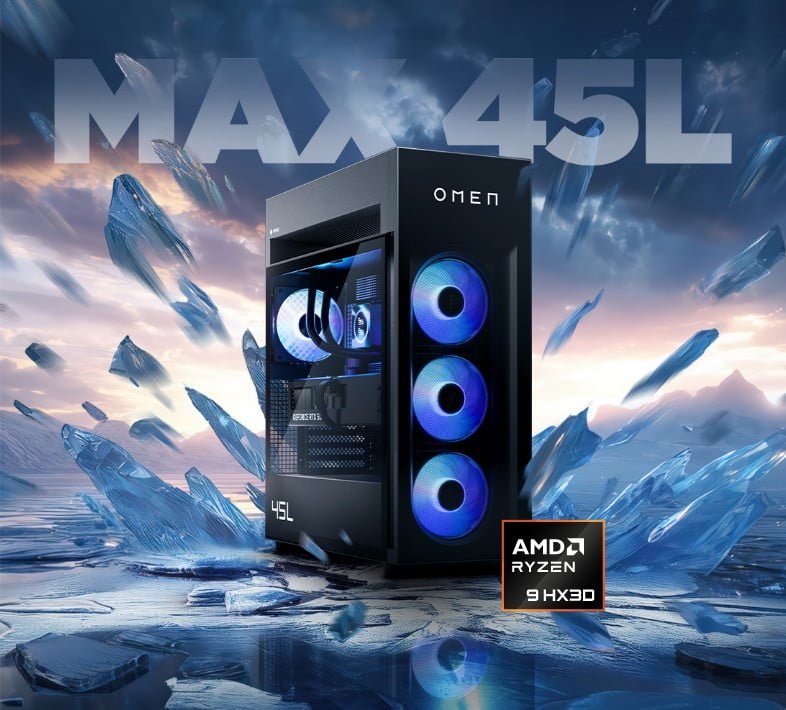
Within our database the closest desktops are large, high-power gaming towers. See our Predator Orion 7000 versus Orion 5000 comparison for Acer's own two models side by side, and the HP OMEN MAX 45L as a rival tower with liquid cooling. For background, our guides to air versus liquid CPU cooling, desktop case airflow and power supply wattage explain the trade-offs behind a 360 mm cooler, a fan-heavy case and a 1200 W supply. Browse all models in the desktop category.
Bottom line
On paper the Predator Orion 7000 is a top-end Acer gaming tower for the Intel Core Ultra 9 285K and RTX 5090 generation, with a 360 mm liquid cooler, a 1200 W supply, up to 128 GB of fast memory and generous storage, all in a recycled-plastic 45-litre chassis. Acer publishes no benchmarks, no noise figures and a cooling claim without a stated baseline, so the strongest facts are the specification and the EMEA and Australian starting prices. Because every component is an "up to" maximum, confirm the exact model on sale in your region.