Dell XPS 14 (DA14260, 2026)
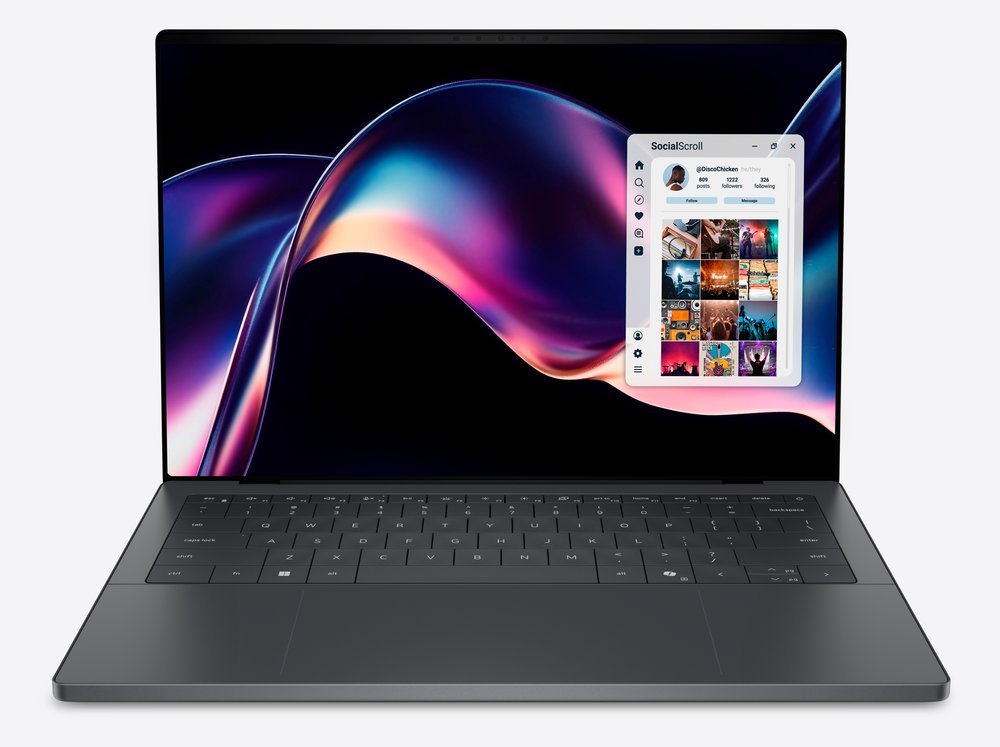
Dell's 2026 XPS 14 (DA14260): a 14.62 to 15.20 mm CNC-aluminium laptop from about 1.36 kg with Intel Core Ultra Series 3 and Arc graphics, a 2K 1-120 Hz LCD or 2.8K tandem OLED touchscreen, three Thunderbolt 4 ports and a 70 Wh battery.
Specifications
| CPU | Intel Core Ultra X7 358H (16 cores, up to 4.8GHz) on listed config; Core Ultra Series 3 family |
|---|---|
| GPU | Intel Arc graphics (12 Xe cores per Dell) |
| RAM | 32GB LPDDR5x up to 9600 MT/s (listed config) |
| Storage | 1TB M.2 2230 Gen4x4 TLC SSD (listed config) |
| Display | 14.0-inch 2K LCD 1920x1200, 1-120Hz, 500 nits (non-touch) or 2.8K 2880x1800 tandem OLED touch (UK page: 20-120Hz, 400 nits) |
| Battery | 3-cell 70Wh; Dell cites up to 27h Netflix streaming / 40h+ local video (Dell tests) |
| Weight | 1.36kg (OLED) / 1.38kg (LCD) starting |
| Dimensions | 309.52 x 209.71 x 14.62mm (OLED) / 15.20mm (LCD) |
| Ports | 3x Thunderbolt 4 (DisplayPort 2.1, Power Delivery), universal audio jack |
| Wireless | Intel Wi-Fi 7 BE211 2x2, Bluetooth 6.0 |
| Chassis | CNC aluminium unibody, Gorilla Glass 3 palm rest, Graphite |
| OS | Windows 11 Home, Copilot+ PC |
At CES 2026 Dell announced that its XPS laptops were not being retired after all. In a launch post dated 5 January it introduced the XPS 14 and XPS 16 as the rebuilt flagship of the family, "rebuilt from the ground up" in Dell's words, and teased a cheaper XPS 13 for later in the year. The XPS 14, model DA14260, is the smaller of the two and the subject of this page. Dell describes it as its thinnest 14-inch laptop, with Intel Core Ultra Series 3 processors, two display options and what Dell calls the best battery life in the industry. This page combines Dell's launch post, its CES 2026 press release and its US product page, and it flags the places where those documents do not agree with one another.
What changed in the redesign
Dell says the unibody design integrates structural side walls into the base for rigidity and durability, and that the laptops are crafted from CNC aluminium and Gorilla Glass with minimal parting lines and a tonal colour palette. For the first time the XPS logo sits on the front cover, something Dell says reviewers and fans had asked for. The traditional function row returns for tactile feedback, the seamless glass touchpad has subtle etching around its active area, and key travel and feedback were optimised for typing. The product page lists a backlit keyboard and a Corning Gorilla Glass 3 palm rest, with the colour Graphite at launch and a Shimmer option due later in the year. An Ubuntu 24.04 version of the XPS 14 was also promised later in 2026.
Repairability and sustainability get space in the launch post. Dell says the keyboards are easy to remove and that these are the first XPS devices with modular USB-C ports, intended to make repairs simpler. It cites recycled steel in the hinges, recycled cobalt and recycled copper in the batteries, and says the laptops meet the EPEAT 2.0 standard; the product page lists ENERGY STAR 9.0 and EPEAT Gold registration with the Climate+ designation. A footnote to the launch post gives material percentages such as 75 percent recycled aluminium in the top and bottom covers and 50 percent recycled cobalt in the 70 Wh battery.
Size and weight
The product page gives dimensions of 12.19 inches wide (309.52 mm), 8.26 inches deep (209.71 mm) and a height of 0.58 inch (14.62 mm) for the 2.8K OLED version or 0.60 inch (15.20 mm) for the 2K LCD version. The starting weight is 3.00 lb (1.36 kg) for the OLED and 3.05 lb (1.38 kg) for the LCD. Dell's launch post rounds this to a thickness of "just 14.6mm" and a weight of "roughly three pounds", more than half a pound lighter than the previous generation. Dell also claims, in a footnote based on its own November 2025 measurements, that the XPS 14's footprint (width by depth) is smaller than that of the MacBook Air 13. So the 14.6 mm headline applies to the OLED model, and the LCD version is about 0.6 mm thicker.
Processor, graphics and memory
The launch post says the XPS 14 uses Intel Core Ultra Series 3 processors with built-in Intel Arc graphics with 12 Xe cores, which Dell describes as Intel's highest-performing integrated graphics. Dell claims up to 57 percent faster AI performance on the XPS 14 and more than 50 percent faster graphics performance than previous models, and it details how those claims were measured. The AI figure compares an XPS 14 with a Core Ultra X7 368H, 2.8K OLED and 32GB of memory against a Dell 14 Premium with a Core Ultra 7 255H, using the Procyon AI Computer Vision benchmark, and the graphics figure comes from Intel's Panther Lake reference validation platform against Lunar Lake and Arrow Lake-H reference platforms in 3DMark Solar Bay, Cyberpunk 2077 and Borderlands 3. Both are Dell-published comparisons, and neither is independent. Note also a naming difference: the AI footnote refers to a Core Ultra X7 368H, whereas the US product page lists a Series 3 Core Ultra X7 processor 358H with 16 cores, 18MB of cache and up to 4.8 GHz. This page follows the product page and treats 368H as a probable typo in the footnote, but Dell does not say so.
The configuration on the product page pairs that processor with 32GB of LPDDR5X at up to 9600 MT/s and a 1TB M.2 2230 Gen4x4 TLC SSD, Windows 11 Home and Copilot+ PC branding. The launch post says the processors enable Copilot+ PC experiences.
Thermal design
Dell says it redesigned the thermal system for this performance, with what it calls its largest and thinnest fans yet delivering better airflow, so that the laptop stays cooler and quieter and gets better battery life. Dell does not publish temperature or noise measurements in the launch post, so the claim of cooler and quieter running is a description of design intent rather than a measured result.
Display options
There are two displays. The 2K LCD is 14.0 inches at 1920 x 1200, non-touch, InfinityEdge, with a 1 to 120 Hz variable refresh rate and 500 nits. Dell says it is the first to market with a 1 to 120 Hz variable refresh rate on a laptop panel, dropping to 1 Hz for static content such as reading email and rising to 120 Hz for scrolling or video, which is meant to save power. The alternative is a tandem OLED, which Dell describes as cinematic quality with enhanced brightness, better efficiency, longer lifespan and improved colour stability; Dell's UK product page lists it as a 14.0-inch touch, 2.8K, 2880 x 1800 OLED with a 20 to 120 Hz refresh range and 400 nits. Dell notes it debuted the world's first tandem OLED laptop in 2024. The camera is an 8MP, 4K unit that Dell calls the thinnest and narrowest it has integrated into a laptop, enabling the narrow bezels.
Battery claims
The battery is a three-cell 70 Wh pack, and Dell says it is the first to use 900ED (energy density) cells, which are smaller and lighter while providing more power. Dell's headline is "the best battery life in the industry", and the claim comes with numbers that need careful reading. The launch post says the LCD models deliver up to 27 hours, referring to a Netflix streaming benchmark run at 250 nits with wireless on, or 40 hours or more of local video playback. The footnote for the local playback test reads: an XPS 14 with a Core Ultra 7 355, Intel graphics, 2K LCD, 16GB of memory and a 1TB SSD, tested in November 2025 at 150 nits, achieved 40 hours 27 minutes, and the XPS 16 achieved 43 hours 20 minutes. So the 40-plus hours figure is for a specific lower-power configuration, not the X7 358H model on the product page, and Dell itself warns that actual battery life may be significantly less. The two headline numbers, 27 and 40-plus, are not contradictory because they measure different workloads.
Ports and wireless
The XPS 14 offers three Thunderbolt 4 USB-C ports, all with DisplayPort 2.1 and Power Delivery, with Kensington lock support through the USB-C ports, and a universal audio jack. Wireless is an Intel Wi-Fi 7 BE211 2x2 card with Bluetooth 6.0. There is no HDMI port, USB-A port or card reader on the page's list, so users who need them will use adapters.
Price and availability
Dell's launch post said limited configurations would be on sale from 6 January 2026 at a US launch configuration price of 2,049.99 dollars for the XPS 14, with additional configurations "including new starting configurations well under $2000" arriving in February. The US product page as read on 30 September 2026 shows a build-your-own starting price of 2,249.99 dollars, and a listed example configuration with the Core Ultra X7 358H, 32GB, 1TB and a non-touch 1920 x 1200 display at 2,619.99 dollars, marked down from an estimated 2,999.99 dollars. Those figures conflict with the February promise, and Dell does not explain the difference; it may reflect configuration or promotion changes. This page uses the current starting price of 2,249.99 dollars.
Where it sits
The XPS 14 is a premium thin-and-light rival to the Apple, Microsoft and Samsung machines in our database, and Dell itself compares its footprint with the MacBook Air. See our Dell XPS 14 versus MacBook Air M5 comparison for the specification differences. Anyone who knows the older Dell XPS 13 9300 will notice how far the design language has moved, and our business laptop showdown and keyboard and trackpad quality guide give context for the function-row and glass-touchpad changes. Our battery life and thermal throttling deep dive helps read the hour claims above. Browse all models in the laptop category.
Bottom line
The XPS 14 (2026) is a rebuilt, thinner, lighter XPS with a choice of long-lasting variable-refresh LCD or a tandem OLED touchscreen, three Thunderbolt 4 ports and a 70 Wh battery. Almost every headline figure, the 14.6 mm thickness, the 27 and 40-plus hour battery claims, the 57 percent AI gain, is Dell's own from internal testing, and some depend on configurations that differ from the one on the product page. Check the exact configuration, the display type and the current price before buying.