Samsung Galaxy Book6 Ultra (16-inch, 2026)
Samsung's 2026 creator laptop: a 16-inch, 15.4 mm Dynamic AMOLED 2X touchscreen with Intel Core Ultra Series 3 (18A), optional GeForce RTX 5060 or 5070, six speakers and an 80.2 Wh battery Samsung rates at up to 30 hours of video playback.
Specifications
| CPU | Intel Core Ultra X9 / 9 / X7 / 7 Series 3 (Intel 18A), Evo Edition; NPU up to 50 TOPS |
|---|---|
| GPU | Intel Arc graphics, or NVIDIA GeForce RTX 5060 / 5070 Laptop GPU with 8GB GDDR7 |
| RAM | LPDDR5X: 32GB (Intel graphics), 16/32/64GB (RTX) per global table; US FAQ says up to 32GB |
| Storage | 512GB / 1TB / 2TB PCIe SSD plus SD expansion slot (global table); US FAQ says up to 1TB |
| Display | 16-inch Dynamic AMOLED 2X touch, 2880x1800, anti-reflective, up to 1000 nits HDR / 500 nits SDR, adaptive 30-120Hz |
| Battery | 80.20Wh typical; up to 30h video playback (Samsung test); 100W (Intel) or 140W (RTX) USB-C charger |
| Weight | 1.79kg (Intel graphics) / 1.89kg (RTX) |
| Dimensions | 356.9 x 248.0 x 15.4mm |
| Ports | 2x Thunderbolt 4, USB-A, HDMI 2.1, SD card reader, headphone/mic |
| Wireless | Wi-Fi 7, Bluetooth 5.4 |
| Audio | Six speakers with Dolby Atmos (four woofers, two tweeters) |
| OS | Windows 11 Home |
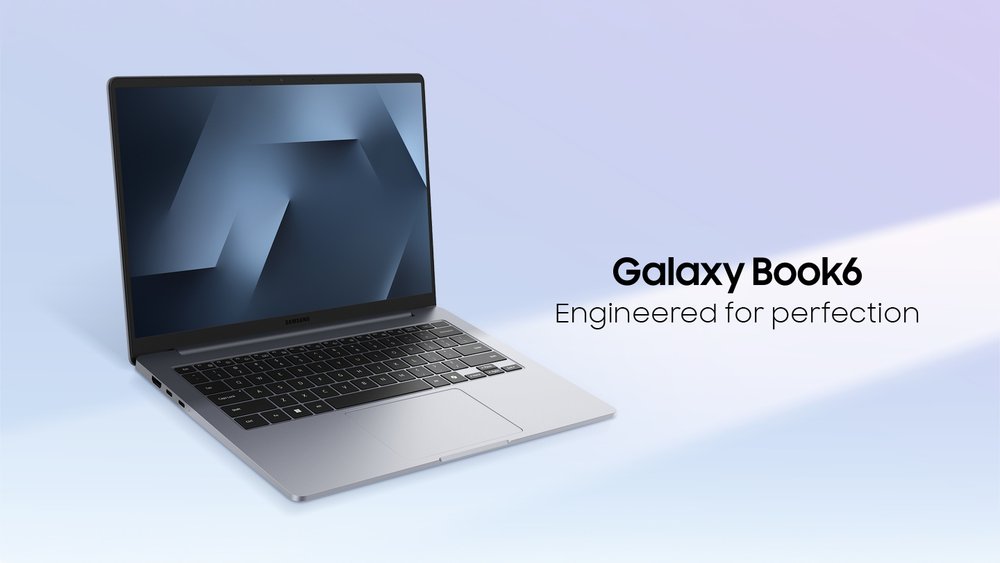
Samsung introduced the Galaxy Book6 Ultra on 6 January 2026 at CES, together with the Galaxy Book6 Pro and the Galaxy Book6, and described the trio as its most advanced Galaxy Book series yet. The Ultra is the top model: a 16-inch machine with an AMOLED touchscreen, a slim aluminium body and, in the configurations that carry it, a dedicated NVIDIA GeForce RTX 5060 or RTX 5070 laptop GPU. Samsung's stated pitch is that "performance defines the PC experience", and the Ultra is where the company puts the most of it. This page collects what Samsung has published in its global and US newsrooms and on its US product page, points out where those sources differ, and leaves out anything Samsung has not said.
Processor, graphics and AI hardware
The whole Galaxy Book6 family uses Intel Core Ultra Series 3 processors, which Samsung describes as the first client system-on-chips built on Intel 18A, a 1.8-nanometre-class node. In the Ultra's specification table the processor is listed as Intel Core Ultra X9, 9, X7 or 7 Series 3 in the Intel Evo Edition, and the integrated NPU is rated at up to 50 TOPS. Samsung's release repeats Intel's claim of up to 16 cores and 60 percent faster CPU performance than the previous generation, and Samsung's own product page adds its own comparison: a CPU up to 1.25 times faster and a GPU up to 1.16 times better than the previous generation, with the NPU at 50 TOPS. Samsung's US product page names three processors in a comparison table, the Core Ultra 7 356H, the Core Ultra X7 358H and the Core Ultra 9 386H, though that table spans the whole family and is not a list of what ships in the Ultra alone.
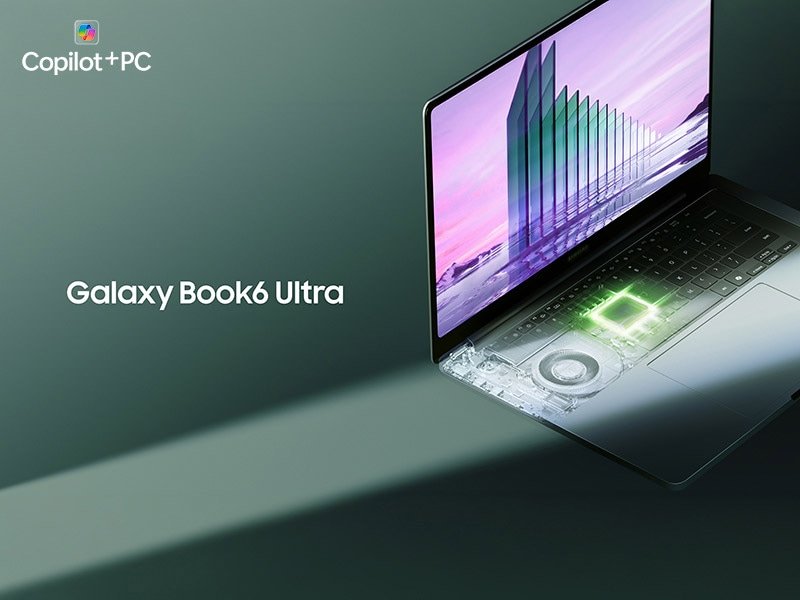
The graphics story is the reason the Ultra exists. Samsung lists two graphics routes: Intel Arc graphics in the "INT" version, and NVIDIA GeForce RTX 5060 or RTX 5070 with 8GB of GDDR7 in the "EXT" version. The release says the RTX 5070 or 5060 laptop GPU unlocks high-speed AI image generation, smooth video playback and editing, and gaming. Samsung's product page adds that the RTX 50 Series GPU supports DLSS 4 and ray tracing, and that it targets video editors, 3D artists, graphic designers and developers as well as gamers. These are Samsung's descriptions of intended use; the company publishes no frame-rate or render-time figures on the pages read for this article, so none are quoted here. Samsung also says the Ultra supports Copilot+ PC features, which rely on the 50 TOPS NPU.
Cooling and thermals
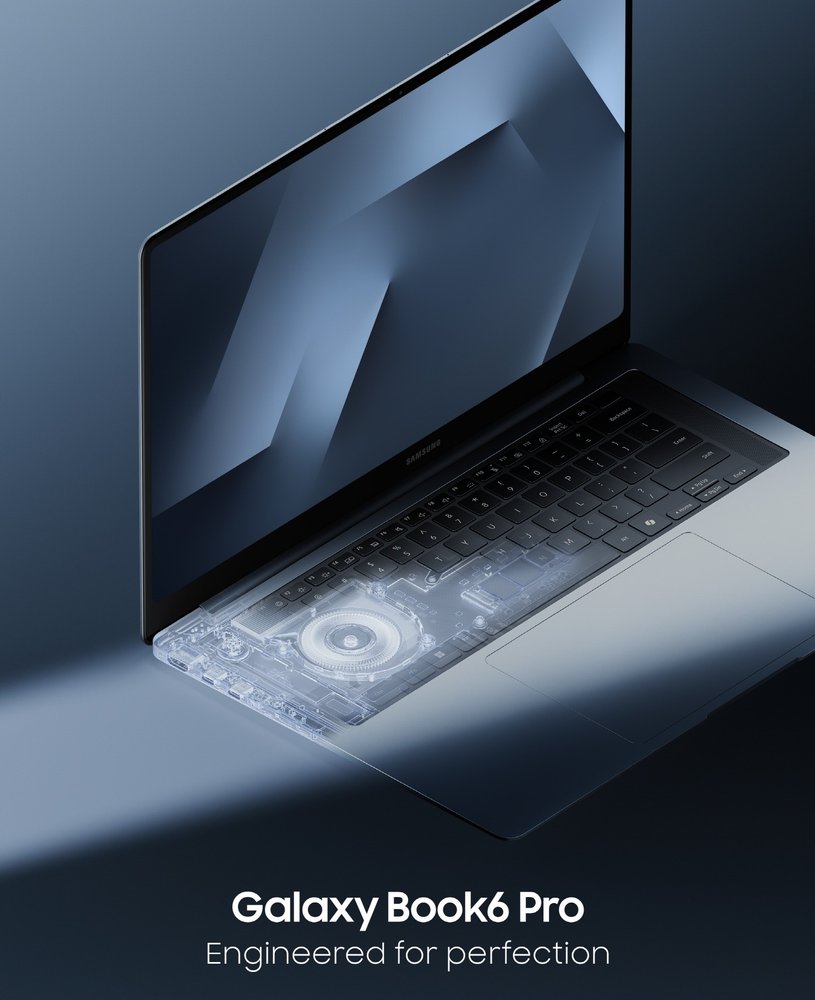
Samsung spends a lot of its announcement on cooling, because the Ultra pairs a fast processor and a discrete GPU with a 15.4 mm body. The company says it redesigned the vapor chamber with a larger surface area in the Ultra, enlarged the fins attached to it, and added a dual-path outlet fan and heatsink that draw heat from the processor and other components. The fan has an optimised blade angle, a larger inlet grill and what Samsung calls proprietary uneven blade spacing to reduce fan noise. Samsung says the fin change improves cooling efficiency by 35 percent compared with the previous generation, and footnote 4 of the release states that this is measured against the Galaxy Book5 Pro 16 with an Intel Core Ultra 7 258V processor, based on internal testing.
The Samsung US product page frames the same work differently: it says the profile is about 1.1 mm slimmer than the previous model while heat dissipation is 7 percent faster, thanks to a wider vapor chamber, improved fins and a quieter fan, and it adds that an extra heatsink lowers palm-rest temperatures. The 35 percent and 7 percent figures are not contradictory on their face, because they are measured against different comparison machines and metrics, but Samsung does not reconcile them, and neither figure has been independently verified. Readers should treat both as Samsung's own claims.
Display
The Ultra's display is a 16-inch touch Dynamic AMOLED 2X panel at WQXGA+ resolution, 2880 x 1800, with an anti-reflective treatment. Samsung quotes a peak HDR brightness of up to 1000 nits and an SDR peak of 500 nits, an adaptive refresh rate from 30 Hz to 120 Hz, True Black 0.0005 nits and a True Bright 1300 certification, and notes that the OLED panel itself was verified by UL, not the assembled laptop. The cover glass is Corning Gorilla Glass with DXC, which Samsung says reduces front-surface reflection by up to 75 percent compared with standard glass, based on Corning laboratory tests, and a Vision Booster mode adapts colour and contrast to ambient light when HDR mode is off. Samsung also states that the Dynamic AMOLED 2X panel used in the Galaxy Book6 Pro has an SGS Eye Care certification, a certification claim the release attaches to the Pro's panel rather than the Ultra's. Because it is a touch panel, the screen accepts direct finger input for editing and note-taking.
Battery and charging
The Ultra carries an 80.20 Wh typical-capacity battery. Samsung says it delivers up to 30 hours of local video playback, roughly five hours more than the previous generation, with the test details in footnote 5: 1080p local files, 150 nits, airplane mode, keyboard backlight off, discharged to 2 percent, run on a pre-release device with the 65W charger. Charging is where the sources disagree. The global release says super-fast charging restores up to 63 percent in 30 minutes, while Samsung's US product page says "up to 65 percent" in one place and "more than 65 percent" in another, with a 65W charger named in that footnote. The table lists a 100W USB Type-C adapter for the Intel-graphics version and a 140W adapter for the RTX version, so the real-world figure depends on which charger and configuration is in the box. The safe reading is that Samsung claims roughly two-thirds of a charge in half an hour, and that the exact percentage varies by document.
Design, keyboard and sound
The Ultra measures 356.9 x 248.0 x 15.4 mm and weighs 1.79 kg in the Intel-graphics version and 1.89 kg with RTX graphics, which Samsung's US site confirms as 3.95 lb and 4.17 lb. Samsung says the thickness is 1.1 mm less than the Galaxy Book4 Ultra. The design is symmetrical, with a centred logo and a two-tone keyboard, and Samsung uses a haptic touch trackpad that detects pressure across the surface for a physical-click feel. Sound comes from six speakers with Dolby Atmos, four force-cancelling woofers in a back-to-back arrangement plus two up-firing tweeters, which Samsung describes as a first for the Galaxy Book line. The webcam is a 2MP 1080p unit and there is a dual-array microphone system.
Memory, storage and ports
Here the documents diverge again. The global specification table lists 32GB of LPDDR5X for the Intel-graphics version and 16GB, 32GB or 64GB for the RTX version, with 512GB, 1TB or 2TB of PCIe storage plus an expansion slot. Samsung's US product FAQ, by contrast, says the Ultra supports up to 32GB of memory and up to 1TB of storage, adds that memory cannot be upgraded after purchase, and points to the SD card slot for extra capacity. The likeliest explanation is that the FAQ describes the configurations sold in one market while the global table lists everything Samsung offers worldwide, but Samsung does not say so. Connectivity is Wi-Fi 7 and Bluetooth 5.4. The ports are two Thunderbolt 4 connectors, one USB Type-A, an HDMI 2.1 port rated for 8K at 60 Hz or 5K at 120 Hz, an SD card reader and a headphone and microphone jack.
Galaxy ecosystem and software
Samsung stresses how the Ultra works with its phones, tablets and other devices. It lists AI Select and AI cut out for selecting and extracting content on the touchscreen, a natural-language search, Note Assist for summaries and translation, Storage Share for reaching phone files, Link to Windows for phone apps, Nearby Devices, Multi Control for using one cursor across devices and Second Screen for using a Galaxy Tab as an extra display. Samsung notes in the release that these features carry conditions, such as the same Samsung account, updated One UI versions and, for some, a network connection, and that basic Galaxy AI features are free while future enhanced ones may be paid. Security is Samsung Knox plus Windows 11 Secured-core PC features, and Samsung Care+ is offered for accidental damage. Windows 11 Home is the listed operating system.
Price and availability
In the United States Samsung opened reservations at a starting price of 2,499.99 dollars for the Galaxy Book6 Ultra, in a Grey finish. In the United Kingdom the recommended price for the 16-inch Ultra with an Intel Core Ultra 7, 32GB of memory, a 1TB drive and RTX 5060 starts at 2,999 pounds, with pre-orders from 25 February 2026 and general sales from 11 March 2026. The global release said the Galaxy Book6 series would reach select markets from late January 2026, with an Enterprise Edition following from April 2026. Prices and configurations vary by market, and this page carries the US starting price only.
How it fits among other laptops
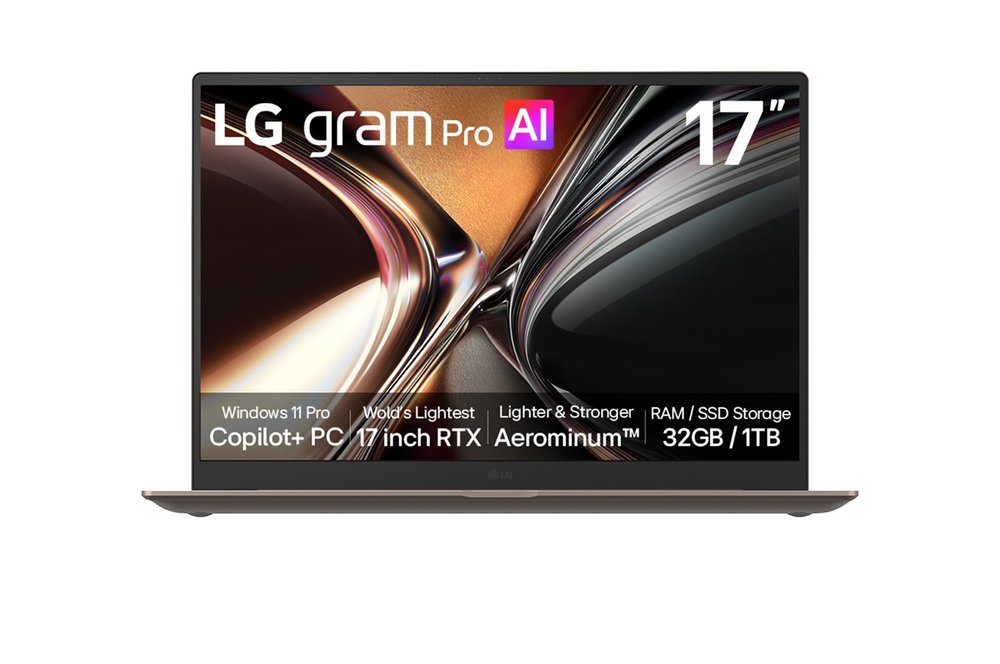
The Ultra is best understood next to its siblings and rivals. Samsung's own FAQ says the Ultra is the most powerful in the series and suits creators who do 4K video editing, 3D design and AI-driven content creation, while the Pro is a lighter, more portable option for professionals who multitask on the move; see our Galaxy Book6 Ultra versus Galaxy Book6 Pro comparison for the side-by-side numbers. If your workload leans on a GPU in a thin body, compare it with the ASUS ROG Zephyrus G16, which chases similar ideas from the gaming side. For background reading, our guide to the best laptops for content creators, our OLED versus IPS display explainer and our battery life and thermal throttling deep dive explain how to weigh the display, battery and cooling claims above. You can also browse the full laptop category.
Bottom line
On paper the Galaxy Book6 Ultra is Samsung's most complete answer to the thin creator laptop: a bright 16-inch OLED touchscreen, an RTX 5060 or 5070 option, a large 80.2 Wh battery, six speakers and a 15.4 mm body. Every headline number, from the 30 hours of video to the 35 percent cooling gain, is a Samsung figure from its own testing, and several details differ between Samsung's global and US pages, notably charging speed and memory and storage ceilings. Check the exact configuration and charger before buying.