Apple MacBook Pro 14-inch (M5, 2025)
The 14-inch MacBook Pro with Apple's M5 chip: a 10-core CPU and GPU with a Neural Accelerator in each core, up to 24 hours of claimed battery life and an XDR display.
Specifications
| CPU | Apple M5 (10-core: 4 super + 6 efficiency) |
|---|---|
| GPU | 10-core with Neural Accelerator in each core |
| Neural Engine | 16-core |
| RAM | 16GB, 24GB or 32GB unified (soldered), 153GB/s |
| Storage | 512GB or 1TB SSD, configurable to 4TB |
| Display | 14.2-inch Liquid Retina XDR, 3024x1964, 120Hz ProMotion, 1600 nits HDR peak, nano-texture option |
| Battery | 72.4Wh; up to 24h video streaming (Apple figure) |
| Weight | 1.55 kg |
| Ports | 3x Thunderbolt 4, HDMI, SDXC, MagSafe 3, 3.5mm jack |
| Wireless | Wi-Fi 6E, Bluetooth 5.3 |
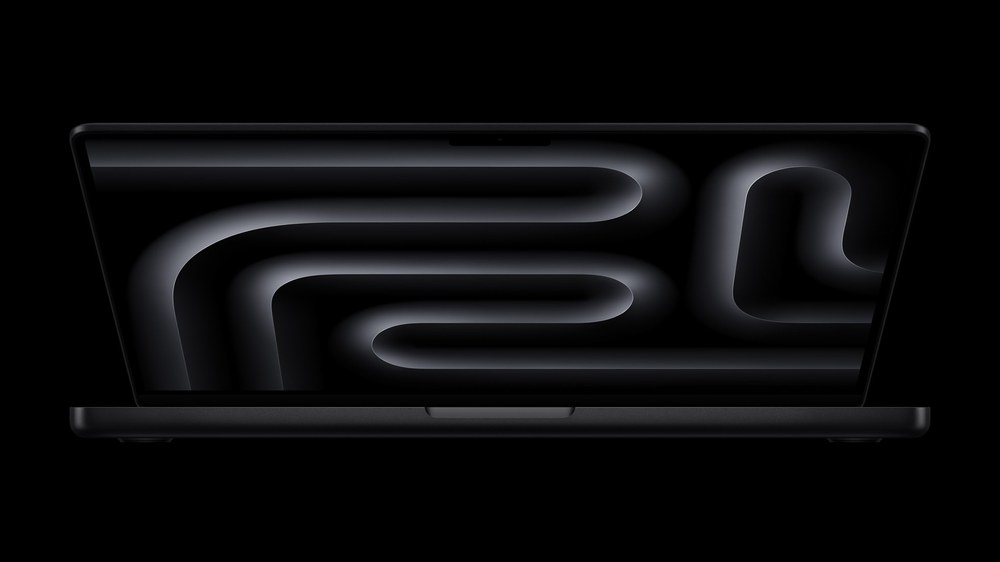
Apple presented the 14-inch MacBook Pro with the M5 chip on 15 October 2025 and started deliveries on 22 October. It keeps the design of the previous generation and changes what is inside: a new chip, faster storage and up to 4TB of capacity. It is the entry point to the MacBook Pro line, sitting below the M5 Pro and M5 Max models that followed in March 2026. This page collects the specifications from Apple's launch release and its technical specification sheet, explains where the two sources differ and looks at who the machine suits.
The M5 chip
The M5 in this laptop has a 10-core CPU made of four super cores and six efficiency cores, a 10-core GPU and a 16-core Neural Engine. Apple's specification sheet lists 153GB/s of memory bandwidth, and the launch release describes it as more than 150GB/s. The headline change is in the graphics unit: each GPU core now contains a Neural Accelerator, a block designed to speed up the matrix arithmetic used by machine-learning models. Apple says this gives up to 3.5 times the AI performance of the M4 and up to 6 times that of the M1, and up to 1.6 times faster graphics than the previous generation. It also says the CPU offers up to 20 percent faster multithreaded performance than the M4 for tasks like compiling code.
Those are Apple's own comparisons and each carries a footnote. The named examples in the release are: up to 7.7 times faster AI video enhancement in Topaz Video compared with the 13-inch MacBook Pro with M1 and up to 1.8 times faster than the M4 model; up to 6.8 times faster Blender rendering than the M1 machine and up to 1.7 times faster than the M4 machine; and up to 2.1 times faster Xcode builds than the M1 machine, 1.2 times faster than the M4 machine. Notice how the gain over the M4 shrinks from 1.8 or 1.7 times for graphics and AI work to 1.2 times for code compilation. That gradient is the honest summary of this generation: the biggest improvements are in AI and graphics, while ordinary CPU-bound tasks improve modestly.
Memory and storage, and how the offer changed
The specification sheet lists 16GB, 24GB or 32GB of unified memory, and storage of 512GB or 1TB with configuration options up to 4TB. Apple's launch release stresses two storage changes: the ability to choose up to 4TB, and SSD performance up to twice as fast as the previous generation, which it says helps with tasks like loading a local language model or exporting large videos.
There is a pricing detail worth knowing because sources disagree if you read them at different times. At launch in October 2025 the 14-inch MacBook Pro with M5 started at 1,599 dollars, or 1,499 dollars with education pricing. When Apple announced the M5 Pro and M5 Max models in March 2026 it also said the 14-inch M5 now comes standard with 1TB of storage, starting at 1,699 dollars, or 1,599 dollars for education. The release does not state the storage of the earlier entry model, so I will not guess it. The current entry price and storage therefore follow the March 2026 announcement.
Display, camera and sound
The display is a 14.2-inch Liquid Retina XDR panel with a native resolution of 3024 by 1964 pixels at 254 pixels per inch. Apple lists a 1,000,000:1 contrast ratio, 1000 nits sustained full-screen brightness and 1600 nits peak for HDR content, SDR brightness up to 1000 nits, wide P3 colour and ProMotion refresh rates up to 120Hz. A nano-texture finish is a configuration option. The 12-megapixel Center Stage camera supports Desk View, and the six-speaker sound system supports Spatial Audio and Dolby Atmos. The three-microphone array is described as studio quality.
A notable design point is that the screen is the same quality as on the much more expensive Pro and Max models. You are not compromising on the panel by choosing the base chip, which is one of the strongest arguments for this machine.
Ports, wireless and displays
The specification sheet lists three Thunderbolt 4 ports with USB 4 at up to 40Gb/s and DisplayPort, an HDMI port, an SDXC card slot, a headphone jack and MagSafe 3 for charging. The wireless line reads Wi-Fi 6E and Bluetooth 5.3. This is where the M5 model differs from the M5 Pro and M5 Max laptops, which use Thunderbolt 5 and Apple's N1 chip for Wi-Fi 7 and Bluetooth 6. If you plan to use very fast external storage or a Thunderbolt 5 dock, this model will run those devices at Thunderbolt 4 speeds.
The machine supports up to two external displays over any combination of Thunderbolt and HDMI, either two displays up to 6K at 60Hz or 4K at 144Hz, or one display up to 8K at 60Hz, 5K at 120Hz or 4K at 240Hz. That is enough for a typical desk with a pair of monitors but not for larger multi-screen arrangements, which need one of the Max chips.
Battery, charging and size
The battery is 72.4 watt-hours. Apple rates it at up to 24 hours of video streaming and up to 16 hours of wireless web browsing, and the release describes fast charging to 50 percent in 30 minutes with a 96W or higher USB-C power adapter. The box includes a 70W USB-C power adapter, so reaching the fastest charge rate means buying a stronger adapter. As always, these are lab figures; heavy loads, high brightness and background tasks will lower them.
The machine measures 1.55 cm high, 31.26 cm wide and 22.12 cm deep and weighs 1.55 kg according to the specification sheet. It is available in space black and silver. Apple says the enclosure uses 100 percent recycled aluminium and that the battery uses recycled cobalt. The keyboard is backlit with Touch ID and there is a Force Touch trackpad. Like all MacBook Pro models, it has no touch screen.
What it runs
The release positions the machine around macOS Tahoe and Apple Intelligence. Apple lists Live Translation in Messages, FaceTime and the Phone app, more powerful Shortcuts and a redesigned look called Liquid Glass. These are software features that also arrive on older supported Macs, so they are not a reason on their own to buy this model. What the hardware adds is the ability to run larger on-device models faster, which Apple frames around LLM apps and image generation tools.
Who should choose it
The M5 14-inch model is a strong choice for students, developers, photographers and business users who want a bright, colour-accurate screen, long battery life and a machine that keeps its full performance on battery. It suits people who will run local AI tools occasionally and do not need more than two external displays. If your work is dominated by heavy 3D rendering, long high-bitrate video edits or very large local models, look at the higher chips, since the memory ceiling here is 32GB.
The obvious comparison is with last year's model. Our page on the 14-inch MacBook Pro with M4 carries its specifications, and the side-by-side comparison of the M5 and M4 models shows how modest some of the differences are. If the M4 price falls, that model may be the better value for CPU-bound work. For the step up in power, read about the MacBook Pro with M5 Pro and M5 Max.
Two buying guides help put the claims in context. Our explainer on Intel, AMD and Apple silicon laptops describes how the chip families differ, and the article on NPU and AI acceleration in laptops explains what a Neural Engine actually does. Because memory cannot be changed after purchase on this laptop, the guide on how much RAM you need is worth reading before you pick between 16GB and 32GB.
Bottom line
The 14-inch MacBook Pro with M5 is a careful update: the same well-regarded body and display, a chip with meaningful gains for AI and graphics, faster storage and a higher storage ceiling. Its limits are Thunderbolt 4, Wi-Fi 6E, a 32GB memory ceiling and non-upgradeable components. Judge Apple's percentages as comparisons against Apple's own earlier machines, and decide by workload rather than by the largest number in the release.